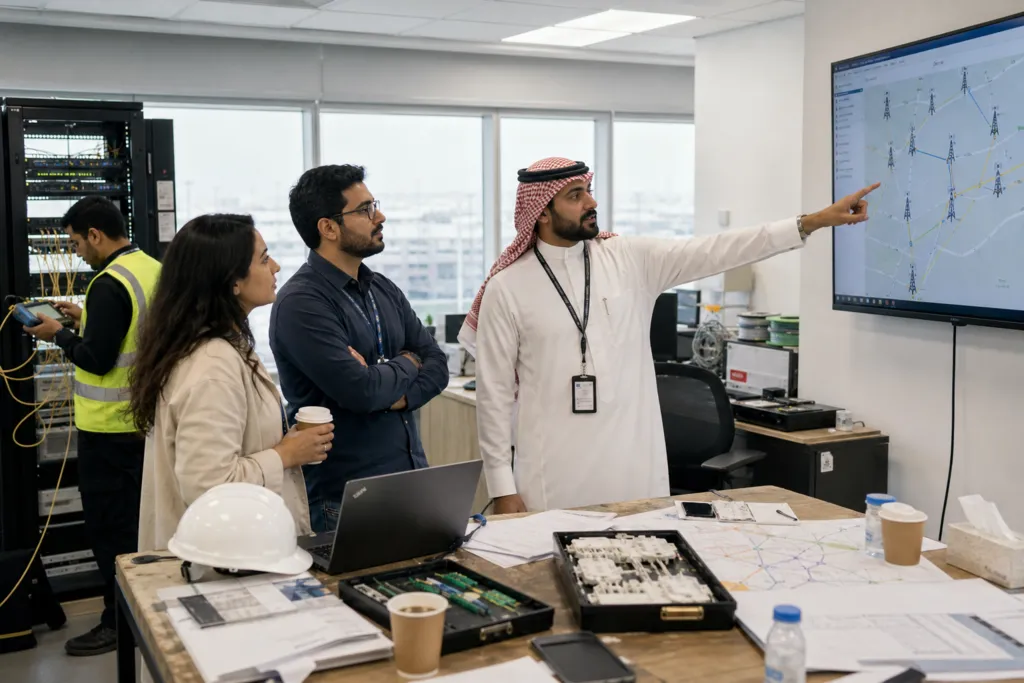
Towers and fiber are no longer framed as simple telecom “real estate.” They are increasingly treated as operating platforms that can host more tenants, carry more traffic, and connect to a wider set of digital services. This shift helps explain why deal activity is widening beyond traditional operator consolidation. It also sets context for Saudi Arabia’s digital infrastructure M&A conversation, even when many of the clearest public metrics are global. For example, one global outlook estimates the telecom infrastructure market reached US$ 261.00 billion in 2025 and could reach US$ 409.21 billion by 2033, with a 5.78% CAGR during 2026–2033. Another global view values the telecommunications infrastructure market at USD 252.41 billion in 2025 and projects USD 384.73 billion by 2033, at a 5.5% CAGR.
Deal logic is also changing because the core tower model is under pressure in mature markets. A McKinsey issue brief notes that towers face expiring or renewing anchor-tenant contracts and limited greenfield rollout opportunities, which can weigh on revenue growth. In the same brief, average tower transaction multiples are described as declining from approximately 22 times EBITDA in 2022 to around 17 times in 2025. That kind of repricing can catalyze more selective acquisitions and encourage buyers to pursue operating improvements. The same analysis argues the next phase of value creation favors players that move beyond passive ownership and position infrastructure as a dynamic platform across the digital economy, including adjacent participants such as energy providers, private-network users, and edge data center customers.
What’s Driving Towers and Fiber Deals Beyond Traditional Telecom
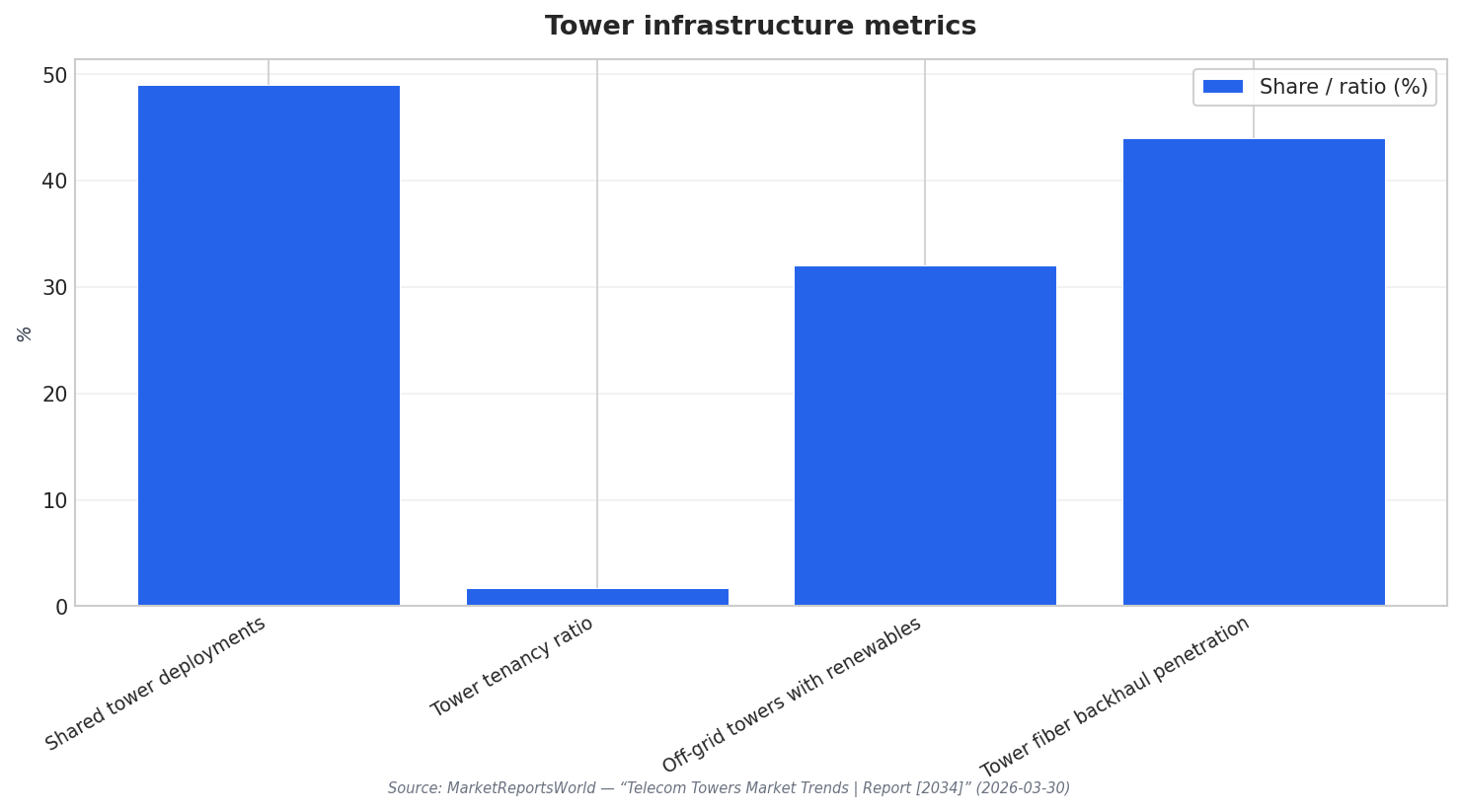
Operating metrics highlight why shared infrastructure is so attractive in transactions. A telecom towers trends report says shared tower models represent nearly 49% of global deployments, and average tenancy ratios have increased beyond 1.7 tenants per tower. It also states that replacement, colocation, and structural upgrades account for nearly 58% of ongoing market activity, implying that value creation can be upgrade-led, not only expansion-led. The same source reports that energy optimization initiatives can reduce operational energy consumption by approximately 37%. It adds that fiber backhaul connectivity to towers has expanded to over 44%, and elsewhere in the same report fiber-connected towers exceed 55%, showing how “tower fiberization” has become part of the standard upgrade playbook that buyers can underwrite when evaluating assets.
Regional concentration and operational constraints also shape where M&A pressure builds. A telecom tower market forecast notes that Asia-Pacific dominates, with China and India accounting for over 2.2 million towers, surpassing the combined total of Japan, Indonesia, Vietnam, and South Korea. The same source describes a market “digital transformation” driven by 5G and competition, with towers evolving into fiber-based and data-centric infrastructure supporting applications beyond traditional telephony. It also highlights practical frictions, including frequent fiber cuts and a shortage of skilled technicians for maintenance tasks such as tower climbing. These details matter for dealmakers because they affect service reliability, upgrade cadence, and the real cost to deliver contracted uptime across acquired portfolios.
Fiber’s investment case increasingly rests on utilization, service expansion, and hybrid models rather than pure buildout volume. McKinsey notes that, beyond coverage, the largest value pool lies in improving take-up, minimizing future duplication, and expanding the range of services delivered over fiber infrastructure. It also reports that executives expect LEO to capture close to 20 percent of existing fiber’s addressable market, particularly in hard-to-reach areas, reinforcing hybrid connectivity rather than direct substitution. In parallel, broader demand signals remain strong. One market report cites global internet penetration crossing 67% in 2025, with over 5.5 billion active users, and projects global internet traffic exceeding 400 exabytes per month by 2030, up from around 350 exabytes per month in 2024. For Saudi deal teams, these global indicators help frame why tower-and-fiber combinations are increasingly assessed as end-to-end digital infrastructure platforms.
How does Saudi Arabia’s digital infrastructure M&A fit into the global towers and fiber deal boom?
What do tower transaction multiples suggest about buyer expectations?
How common is tower sharing, and why does it matter for deals?
How far has fiber backhaul to towers progressed globally?
What does the Asia-Pacific tower footprint indicate about market structure?
Talk to us for your needs in:
-
Due Diligence and Valuation Services
-
M&A Strategy and Advisory
-
Post-Merger Integration Management
-
Regulatory and Compliance Advisory
-
Market Entry and Expansion Consulting
-
Investment and Financial Analysis
-
In-Depth Market Survey for M&A
-
Market Intelligence and Insights in M&A
-
Feasibility Study and Assessment in M&A
-
Saudi M&A Benchmarking