Saudi poultry producer Tanmiah Food Co. has signed a memorandum of understanding (MoU) with Malaysia’s Tradewinds (M) Berhad to assess cooperation across the halal poultry protein value chain. The 12-month renewable agreement focuses on exports and regional market development. The framework includes exploring exports of Saudi-produced chicken products to Malaysia, evaluating joint investment in a Malaysian processing facility, and leveraging Malaysian operations as a hub for wider Asia-Pacific production. Tanmiah also said it plans to assess future investments across the poultry value chain, including farming, hatcheries, and processing operations, while the parties consider building a global halal, sustainable, and healthy protein brand supported by dual halal certification.
Management messaging positions Malaysia as both a demand market and a platform market. Tanmiah CEO Zulfiqar Hamadani described Malaysia as “one of the most respected halal markets in the world and a natural gateway to the wider Asia-Pacific region,” and linked the ambition to Vision 2030 goals of growing Saudi non-oil exports and establishing the Kingdom as a leading exporter of high-value halal food products. Tradewinds CEO Dennis Foo said the alliance combines complementary strengths and highlighted potential in production, processing, and exports. For readers tracking Saudi halal food outbound deals, the structure matters: it is not just a sales channel concept, but also a processing-and-distribution concept designed to scale across Southeast Asia and the broader Asia-Pacific region.
Why Malaysia Is a Natural Halal Hub for APAC Expansion
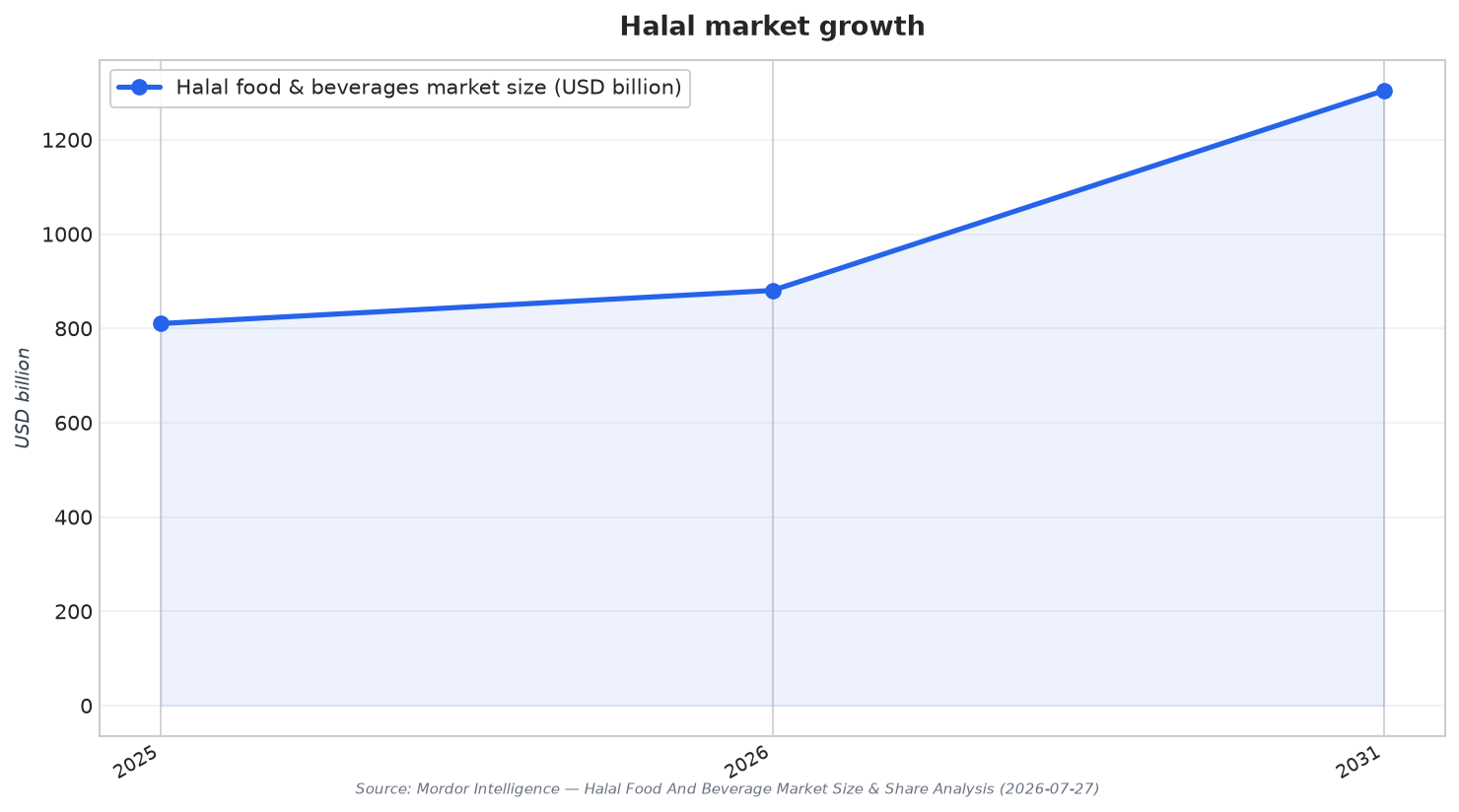
Market context supports the logic of using Malaysia as an expansion base. One global view from Mordor Intelligence expects the halal food and beverages market to increase from USD 810.25 billion in 2025 to USD 880.41 billion in 2026 and reach USD 1,304.21 billion by 2031, with Asia-Pacific commanding 55.69% of revenue in 2025. Another report, from IMARC, also places Asia Pacific as the largest region, with a 48.5% share in 2025, and notes that meat, poultry, and seafood led with a 50.3% share in 2025. In this backdrop, Tanmiah’s focus on halal poultry protein and a Malaysia-based operating hub aligns with where regional share and protein demand are most concentrated.
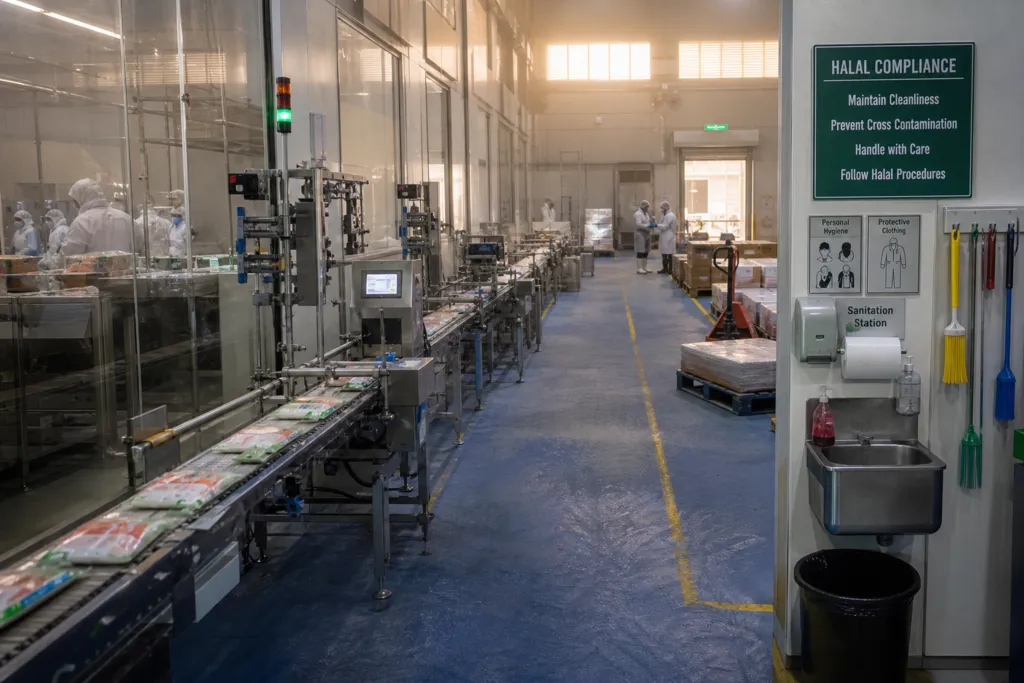
Certification credibility and cross-border compliance are a second driver. IMARC states that Malaysia’s JAKIM certification is accepted in over 80 countries, which can lower trade barriers for certified products. At the same time, Mordor’s halal meat coverage highlights that exporters often face parallel tracks: Indonesia’s BPJPH and MUI can require separate audits even for JAKIM-certified plants, while the UAE’s ESMA and Saudi Arabia’s SFDA impose additional documentation for imported products. Tanmiah’s plan to support a global brand with dual halal certification fits this reality, because distribution across multiple Asia-Pacific and Middle East destinations can require more than one audit and documentation pathway.
The Tanmiah-Tradewinds MoU also sits alongside wider capital and partnership activity in halal proteins. Mordor’s halal meat report cites JBS commitments of USD 235 million to Saudi and Omani facilities, Tyson Foods acquiring 60% of Saudi processor Supreme Foods, and Tyson forming a 50:50 joint venture with Tanmiah to explore global halal opportunities. It also notes an MBRF transaction injecting USD 2.07 billion of Middle Eastern assets into a joint venture with Saudi Arabia’s Public Investment Fund and Halal Products Development Company, creating the Sadia Halal entity with a planned 2027 Riyadh IPO. Against that landscape, Tanmiah’s Malaysia move looks like a practical operating play: combine export flows, processing investment evaluation, and a regional hub to pursue growth where Asia-Pacific remains central to halal market demand.
What did Tanmiah and Tradewinds agree to explore in Malaysia?
Why is Malaysia positioned as a gateway for Tanmiah’s Asia-Pacific plans?
How do certification rules affect cross-border halal expansion?
What market signals support more Saudi Arabia-to-APAC halal partnerships?
How are Saudi halal food outbound deals evolving in the protein sector?
Talk to us for your needs in:
-
Due Diligence and Valuation Services
-
M&A Strategy and Advisory
-
Post-Merger Integration Management
-
Regulatory and Compliance Advisory
-
Market Entry and Expansion Consulting
-
Investment and Financial Analysis
-
In-Depth Market Survey for M&A
-
Market Intelligence and Insights in M&A
-
Feasibility Study and Assessment in M&A
-
Saudi M&A Benchmarking