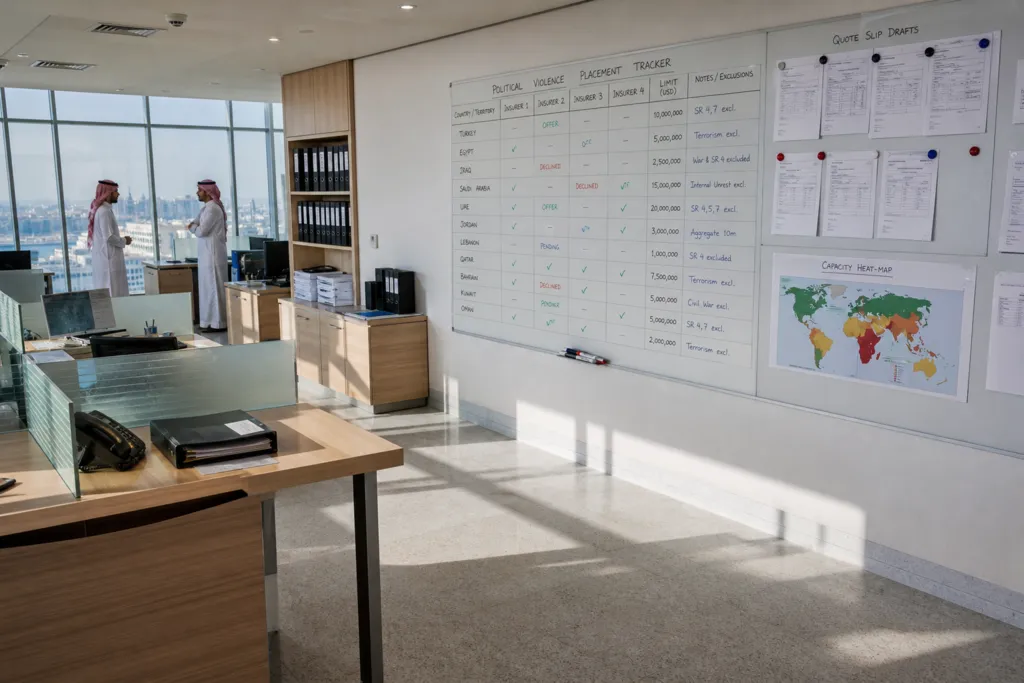
Political-violence cover moved from background diligence to front-of-pack structuring for Saudi-linked cross-border acquisitions after the 2026 attacks. Throughout 2026, reports described missiles and drones hitting military and civilian assets across the region, including an oil refinery in Saudi Arabia and LNG facilities in Qatar. In October 2026, Saudi aviation infrastructure then came under sustained attack between 6 and 22 October, with ballistic missile and drone strikes against airports in Riyadh, Abha, and Dammam. For M&A teams, this changes how to think about completion risk, continuity plans, and whether standalone political violence and terrorism (PVT) insurance is needed alongside other lines that typically exclude war and political violence.
Pricing and claims context matters because underwriters and lenders look for recent loss experience when assessing terms. Marsh estimated political violence losses at more than USD 3 billion, representing gross insured losses across the Middle East and North Africa between March 1 and July 24. AGBI also reported that increased demand driven by conflict pushed premiums for PVT cover, also called war risk insurance, higher. At the same time, commentary noted the Gulf’s growing role, tied to increasing capital, an influx of international talent, and the growing sophistication of insurance markets in the UAE and Saudi Arabia. For Saudi acquisition strategies, the message is mixed: capabilities are developing, but risk pricing can re-rate quickly after high-profile incidents.
What the 2026 Capacity Shock Means for Deal Certainty
Capacity can matter as much as premium when a buyer needs certainty by signing or closing. In the Gulf event market, Marsh reported that available war and political violence insurance capacity declined from more than USD 1 billion before the conflict to approximately USD 200 million during the first quarter of 2026, a reduction of around 80%. Bytes Europe described coverage becoming difficult to secure as insurers reduced capacity, restricted coverage, and increased premiums, while dedicated war-related event cancellation capacity remained extremely limited. Separately, travel-risk demand signals shifted too: before the 6 October airport strikes, Saudi Arabia accounted for around 6% of all Hotspot Cover policies and quotes. For acquisition planning, this supports early broker engagement and contingency structures if capacity tightens during a live geopolitical cycle.
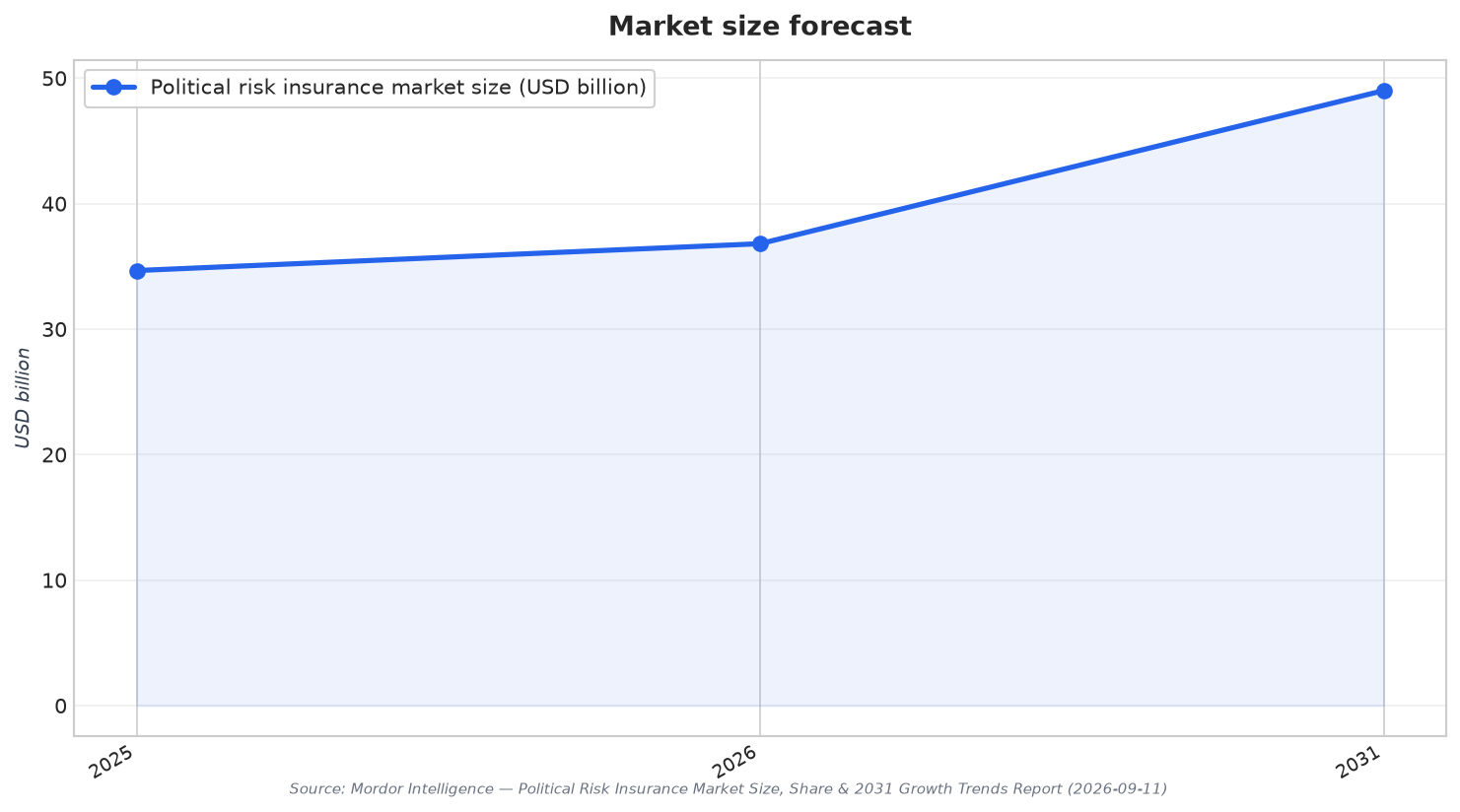
Macro market growth does not automatically translate into easy placement for the most sensitive exposures, but it provides context for the availability of tools. Mordor Intelligence projected the political risk insurance market at USD 34.67 billion in 2025 and USD 36.81 billion in 2026, reaching USD 49.01 billion by 2031, with a CAGR of 5.89% from 2026 to 2031. In that same framework, political violence represented 34.25% of market share in 2025 and is projected to grow at a 7.4% CAGR through 2031. The report also highlighted that brokers and intermediaries captured 52.77% of market share in 2025, reinforcing that specialist placement work is central when buyers want coverage that aligns with cross-border operational footprints and transaction requirements.
For Saudi political risk insurance M&A planning specifically, the key is to treat political-violence cover as a transaction input, not an afterthought. Sources describe a broader expansion of buyer focus beyond conventional expropriation or war scenarios toward sanctions pressure, regulatory action, and state-backed interference in cross-border operations. They also note that capacity remains uneven across jurisdictions and can be harder to access in the most sensitive countries, even when aggregate capacity exists. That reality, combined with the 2026 Gulf capacity drop and the documented attacks on Saudi infrastructure, suggests that acquisition teams should test insurability early, map exclusions across primary programs, and align coverage intent with lenders, boards, and post-close operators before market conditions shift.
Why did political-violence insurance become more important for Saudi-linked acquisitions after 2026?
What loss and claims context did Marsh estimate for political violence in 2026?
How much did Gulf war insurance capacity fall during early 2026?
How big is the political risk insurance market projected to be by 2031?
How should buyers approach Saudi political risk insurance for M&A without over-relying on general market growth?
Talk to us for your needs in:
-
Due Diligence and Valuation Services
-
M&A Strategy and Advisory
-
Post-Merger Integration Management
-
Regulatory and Compliance Advisory
-
Market Entry and Expansion Consulting
-
Investment and Financial Analysis
-
In-Depth Market Survey for M&A
-
Market Intelligence and Insights in M&A
-
Feasibility Study and Assessment in M&A
-
Saudi M&A Benchmarking