For many venture investors, an IPO is the dream exit. But in Saudi Arabia, the public path has looked uncertain. In 2026, there has been just one initial public offering on the Saudi Exchange so far, with plans underway for a second. One market voice said, “IPOs now are the worst decisions to take,” pointing to volatility across public markets. In this setting, venture firms can still seek liquidity without waiting for a listing.
Secondary sales are one of the clearest alternatives. A secondary sale is the process of selling shares by existing stakeholders in a private business organization before the company’s IPO or acquisition. Investors and employees of a start-up can sell their stocks to convert them into cash. In venture capital terms, secondary market sales let investors sell their shares to other private buyers, giving flexibility and liquidity without a full company exit.
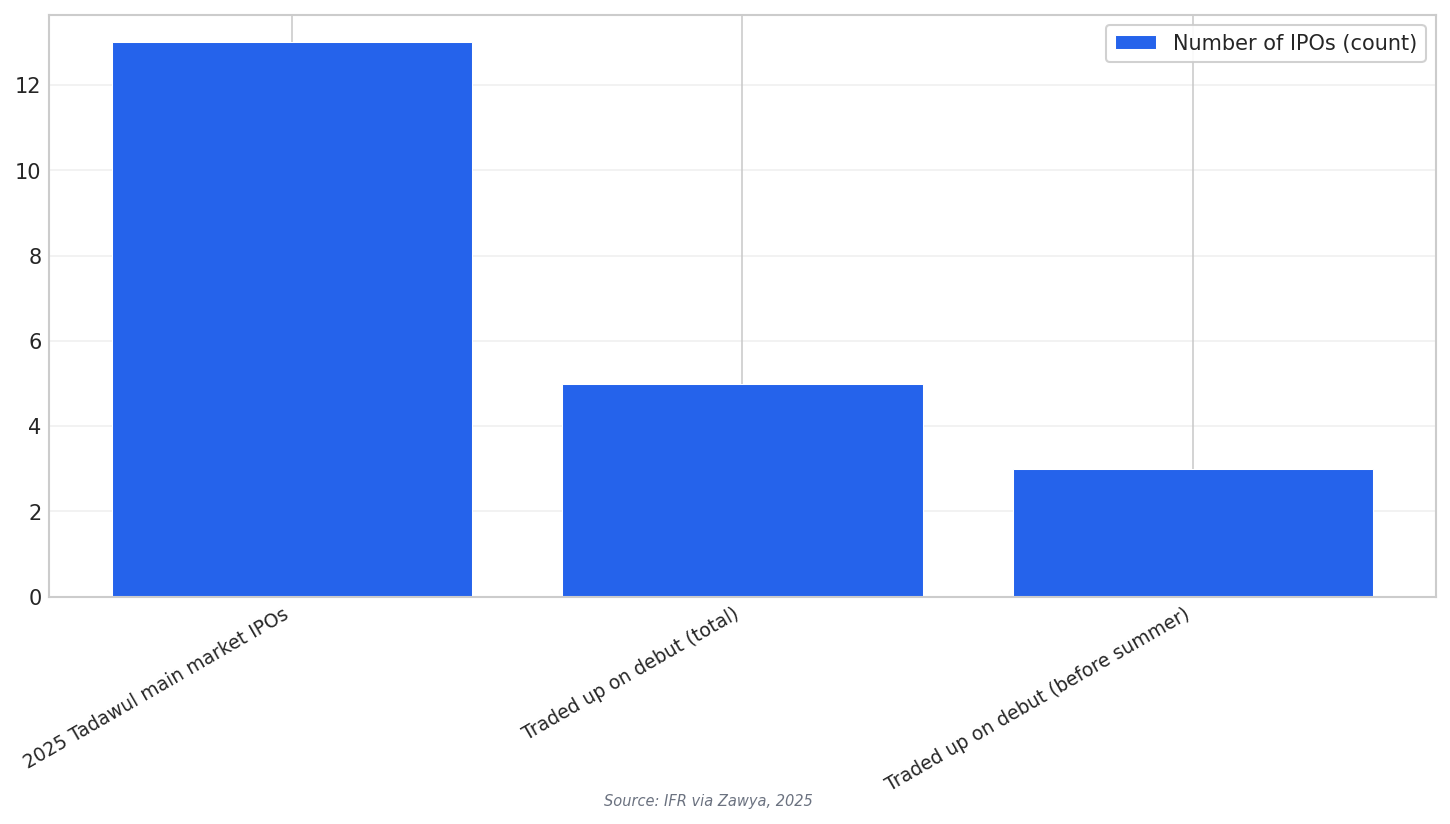
The recent IPO record helps explain why the option matters. In 2025, 13 main market IPOs priced on Tadawul and began trading. Only five traded up on debut, and three of those came before the summer. That weak early performance can cool appetite for new floats and makes some founders and VCs more willing to consider private liquidity routes.
Why Secondary Exits Can Fit the Saudi Moment
Secondary transactions can also match VC fund timelines. One guide notes that venture capitalists typically hold their investments for seven to ten years. If an IPO window is not attractive, waiting can be costly. Secondary deals can allow partial exits, portfolio rebalancing, or earlier returns, while the company stays private and keeps building.
Saudi’s broader market signals are mixed. The Tadawul index declined 13% in 2025 and was flat in 2024, though it is up around 4% so far this year. Regulators are trying to revive the market by attracting more foreign investors. Foreign investors will be allowed to invest directly in Saudi stocks starting next month, and the regulator is reviewing rules that cap foreign ownership of companies at 49%. Traders and analysts predict $10 billion of inflows.
At the same time, Saudi Arabia has been a major VC market in the Gulf. The country accounted for around three quarters of VC investments made across the Gulf in 2025. But disruptions and wider concerns can still hit funding conditions. If new funding becomes harder and IPOs feel risky, the logic of “Saudi secondary transactions VC” becomes simple: give early investors and employees a way to turn shares into cash without betting everything on public markets.
What is a secondary sale in venture capital?
Why would Saudi VCs exit through secondary transactions instead of an IPO?
What does the 2025 Tadawul IPO performance suggest about IPO risk?
How can market reforms affect exits for Saudi secondary transactions VC?
Talk to us for your needs in:
-
Due Diligence and Valuation Services
-
M&A Strategy and Advisory
-
Post-Merger Integration Management
-
Regulatory and Compliance Advisory
-
Market Entry and Expansion Consulting
-
Investment and Financial Analysis
-
In-Depth Market Survey for M&A
-
Market Intelligence and Insights in M&A
-
Feasibility Study and Assessment in M&A
-
Saudi M&A Benchmarking