
ESG due diligence is no longer an optional workstream in Saudi deals. Even where reporting is described as voluntary, expectations are tightening fast. Vision 2030 has pushed sustainability into the center of how the market thinks about governance, transparency, and long-term value. For buyers, lenders, and boards, that changes how Saudi transactions get approved and executed.
The direction has been clear for years. The Capital Market Authority (CMA) issued voluntary ESG disclosure guidelines in 2019. The Saudi Exchange (Tadawul) issued its ESG reporting framework in 2021. Saudi-listed firms also gained a dedicated ESG index in 2023 to spotlight best practices. Separate from disclosure, Saudi Arabia has pledged net-zero greenhouse emissions by 2060, Aramco targets net-zero operations by 2050, and the Saudi Green Initiative aims to cut 278 million tons of CO₂ annually by 2030.
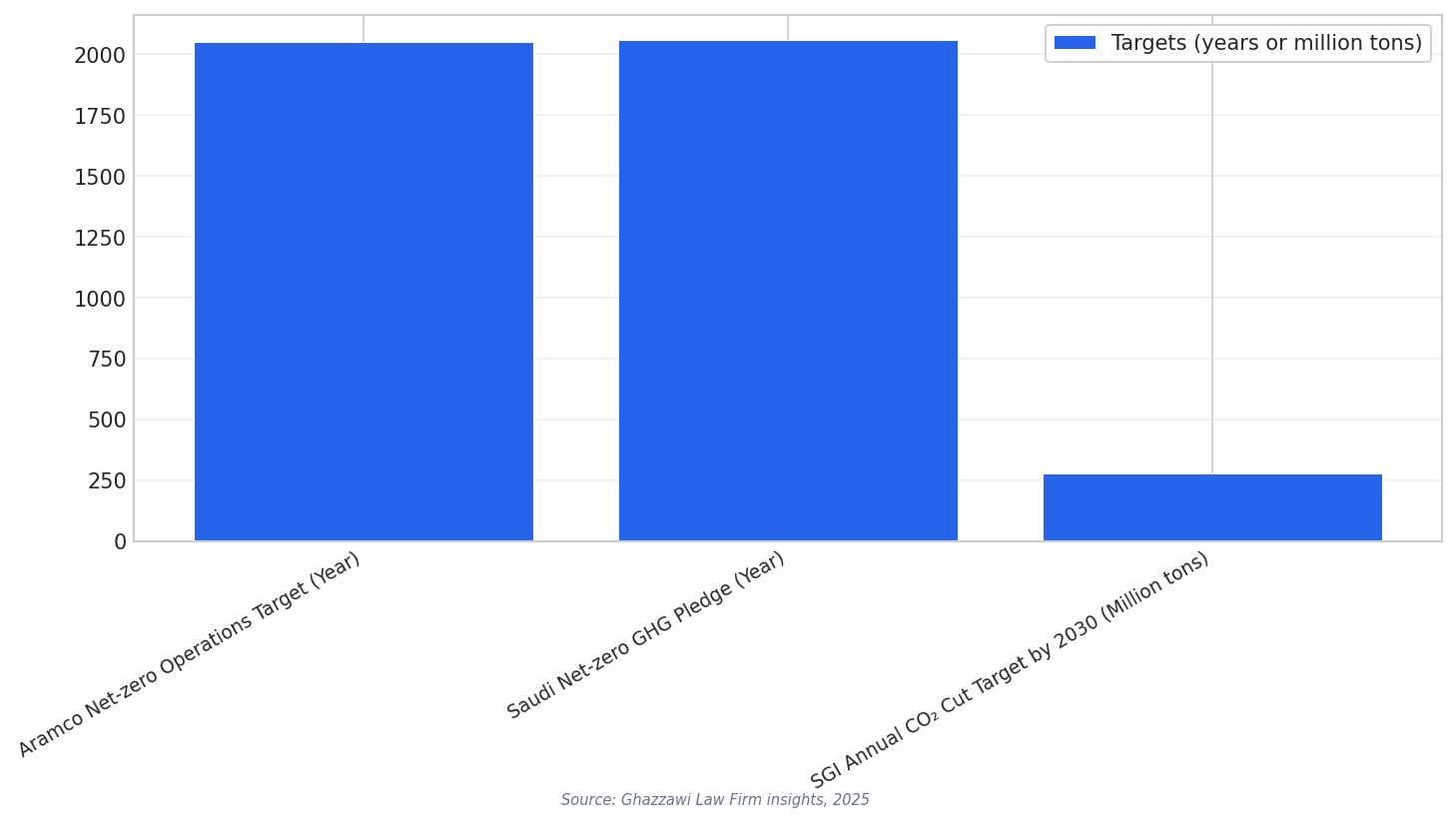
These commitments matter in M&A because they shape what “acceptable risk” looks like. A 2026 study explains that Tadawul’s 2021 ESG guidelines, while not strictly enforced in law, operate as a de facto mandatory framework in the Saudi capital market. The same source notes that this quasi-mandatory status is linked to Vision 2030, which increasingly connects access to government-led mega-projects and international capital with robust ESG transparency.
What ESG Due Diligence Actually Checks in Saudi Deals
ESG due diligence asks questions that standard legal and financial diligence can miss. A Middle East M&A ESG due diligence guide highlights carbon footprint analysis, regulatory compliance verification, and governance due diligence to prevent value erosion and uncover hidden liabilities. It also warns of “regulatory velocity,” pointing to Saudi Arabia’s Environmental Law (2019) and upcoming executive regulations that can create retroactive liability exposure for historical contamination.
In the GCC context, ESG diligence often includes government interface quality in regulated sectors and checks tied to nationalization programs such as Saudization. It also examines board effectiveness, related-party transaction controls, anti-corruption program maturity, and whistleblower mechanism effectiveness. For family-owned businesses common in regional M&A, governance diligence must also navigate complex shareholder structures and succession planning opacity.
Saudi deal execution is also influenced by what is happening in nearby markets. One regional overview notes that mandatory reporting is being phased in across the UAE, Oman, Jordan, Qatar, and Kuwait, while Saudi Arabia and Bahrain are encouraging adoption through guidance and expectation-setting. Oman’s Muscat Stock Exchange requires listed companies to publish ESG reports aligned with GRI and GCC metrics starting 2025. This wider shift raises the baseline for data quality, controls, and assurance during due diligence across cross-border deal teams.
Why is ESG due diligence Saudi M&A becoming mandatory in practice?
Which Saudi ESG milestones should deal teams know?
What risks does ESG due diligence look for in Saudi transactions?
How do net-zero and Saudi Green Initiative targets affect M&A diligence?
Talk to us for your needs in:
-
Due Diligence and Valuation Services
-
M&A Strategy and Advisory
-
Post-Merger Integration Management
-
Regulatory and Compliance Advisory
-
Market Entry and Expansion Consulting
-
Investment and Financial Analysis
-
In-Depth Market Survey for M&A
-
Market Intelligence and Insights in M&A
-
Feasibility Study and Assessment in M&A
-
Saudi M&A Benchmarking