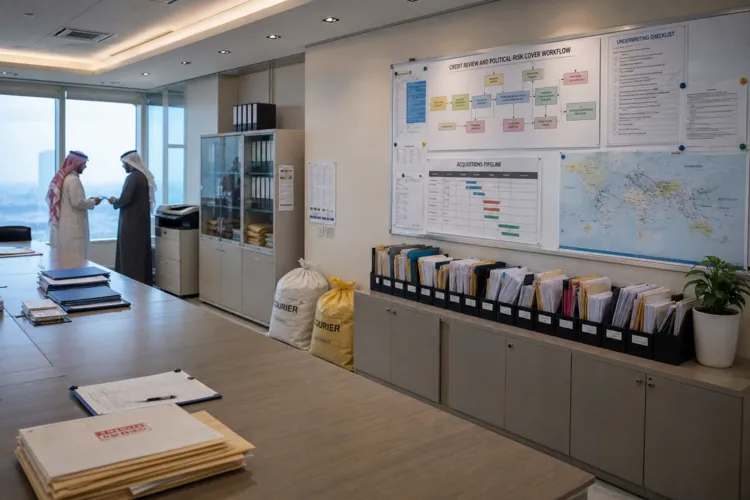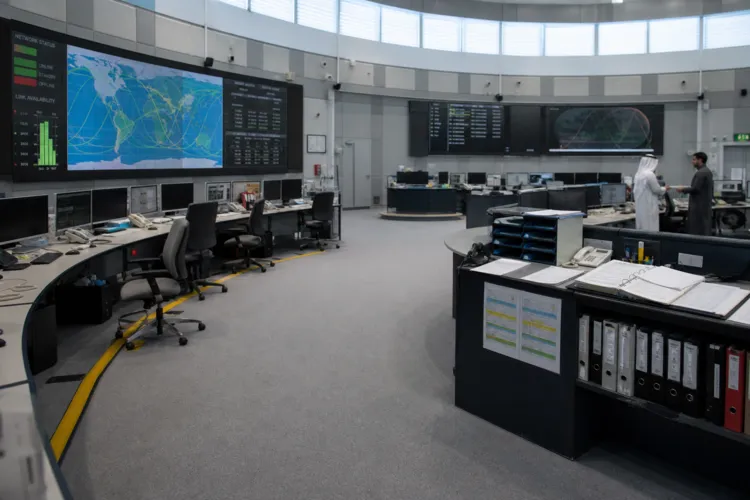
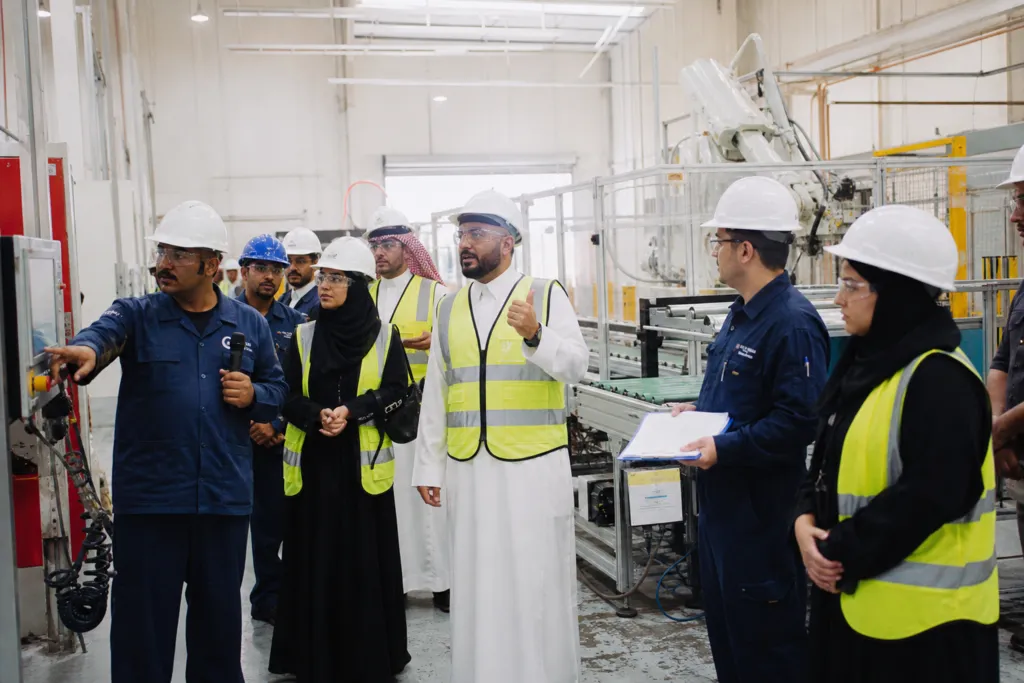
Under a localization push, the most practical question is often not “Should we localize?” but “How do we acquire capacity that can scale?” Saudi Arabia’s NIDLP-aligned dealmaking can focus on buying plants, suppliers, or technical capabilities that already exist, then upgrading them to meet local supply expectations. The challenge is that the sources available here do not provide Saudi-specific localization metrics. So, the best we can do is use clear external signals, with explicit geography, to inform how an acquisition thesis could be structured around capacity utilization, working-capital friction, and automation readiness.
In the United States, the Federal Reserve reported total industrial production at 102.6% of its 2017 average in May, which was 1.7% above its year-earlier level. Capacity utilization edged up to 76.2%, described as 3.2 percentage points below its long-run (1972–2025) average. Manufacturing capacity utilization was 75.7% in May, also noted as 2.5 percentage points below its long-run average. For a Saudi Arabia capacity-acquisition lens, this kind of data acts as a reminder that “available” capacity can exist even in mature markets, and that acquiring a running asset may still require active programs to unlock more throughput and resilience.
Where Localization-Minded Acquirers Look for Immediate Levers
Automation and operational digitization often become the immediate levers after a capacity purchase, because they can raise output without waiting for new construction. In a 2025 Deloitte survey of 600 US manufacturing executives, 80% said they plan to invest 20% or more of their improvement budgets in smart manufacturing initiatives. The cited focus areas include automation hardware, data analytics, sensors, and cloud computing. Deloitte also notes interest in agentic AI and that, in an early 2025 Manufacturing Leadership Council survey, nearly one-quarter (22%) of manufacturers plan to use physical AI in the near term. For a Saudi Arabia localization acquisition strategy, these figures provide a concrete benchmark for how aggressively buyers elsewhere are funding post-deal productivity and capacity unlocks.
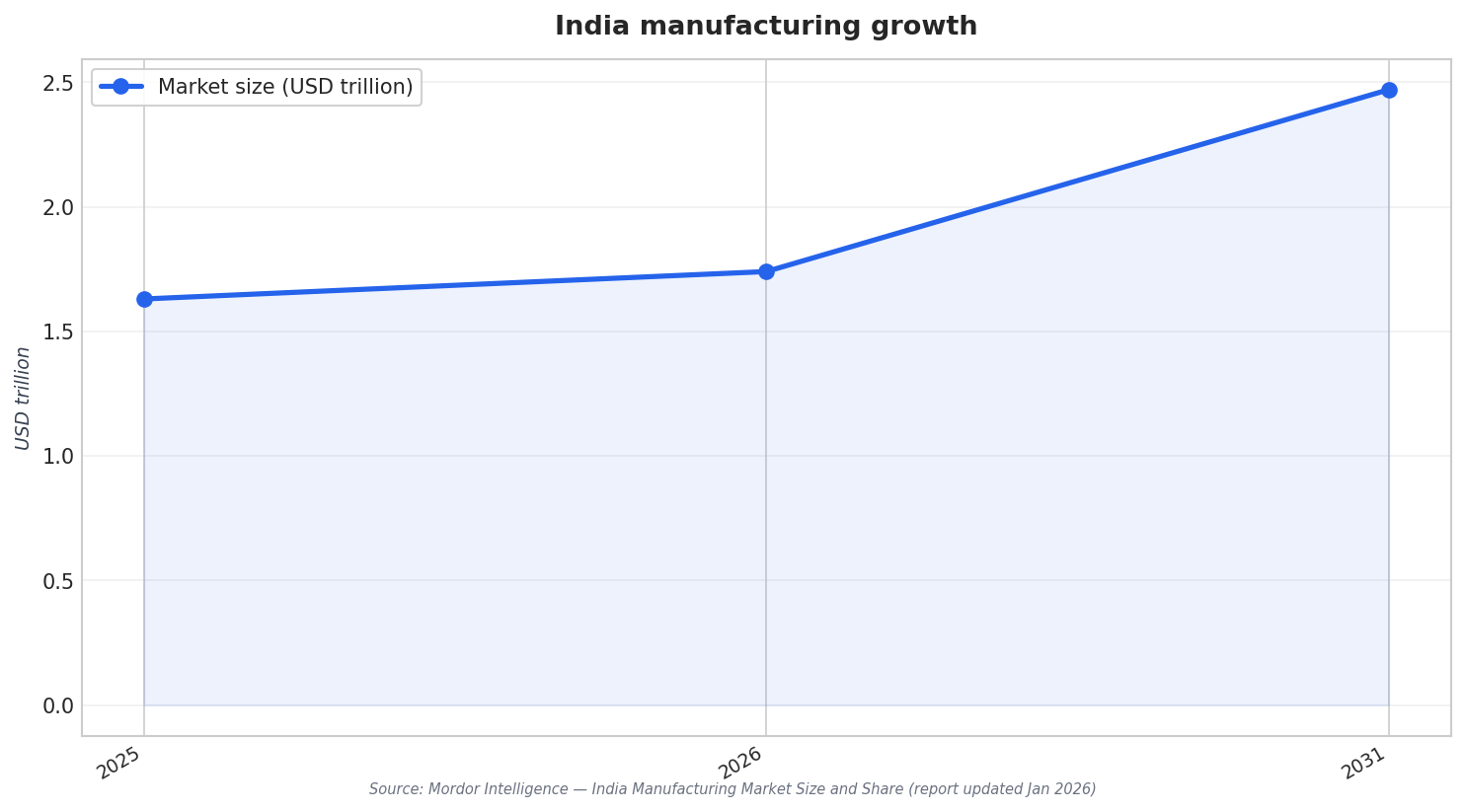
India offers another external reference point for what a supplier-base expansion cycle can look like when incentives and market pull align. Mordor Intelligence projects India’s manufacturing market at USD 1.74 trillion in 2026 and USD 2.47 trillion by 2031, with a CAGR of 7.26% from 2026 to 2031. It also states that PLI 2.0 programs are worth USD 26 billion and references manufacturing FDI reaching USD 22 billion in 2025. The same source says digital-credit platforms shortened working-capital cycles from 90 days to fewer than 45 days for tier-2 suppliers. These are India-specific facts, not Saudi ones, but they illustrate why acquirers chasing localization often prioritize targets that can expand domestic suppliers while reducing cash-conversion friction.
Deal selection can also be shaped by where global automation spending is headed. IndexBox values the world robot guidance systems market at approximately USD 4.8 billion in 2025 and forecasts a CAGR of 11.2% from 2026 to 2035. It also assigns regional shares of 50% for Asia-Pacific, 27% for Europe, and 18% for North America. For Saudi industrial localization M&A, the implication is tactical: when acquiring manufacturing capacity, diligence should not stop at the plant and permits. It should also test whether the asset can absorb modern guidance, sensing, and flexible-line tooling—because global competitors are investing in systems designed to run multi-variant production without repeated mechanical retooling.
How can Saudi Arabia’s localization M&A logic use capacity data without Saudi-specific figures?
What operational upgrades are most commonly funded after a capacity acquisition?
Which figures show how supplier ecosystems can expand under an incentive push?
How does automation market growth relate to localization-focused acquisitions?
Talk to us for your needs in:
-
Due Diligence and Valuation Services
-
M&A Strategy and Advisory
-
Post-Merger Integration Management
-
Regulatory and Compliance Advisory
-
Market Entry and Expansion Consulting
-
Investment and Financial Analysis
-
In-Depth Market Survey for M&A
-
Market Intelligence and Insights in M&A
-
Feasibility Study and Assessment in M&A
-
Saudi M&A Benchmarking