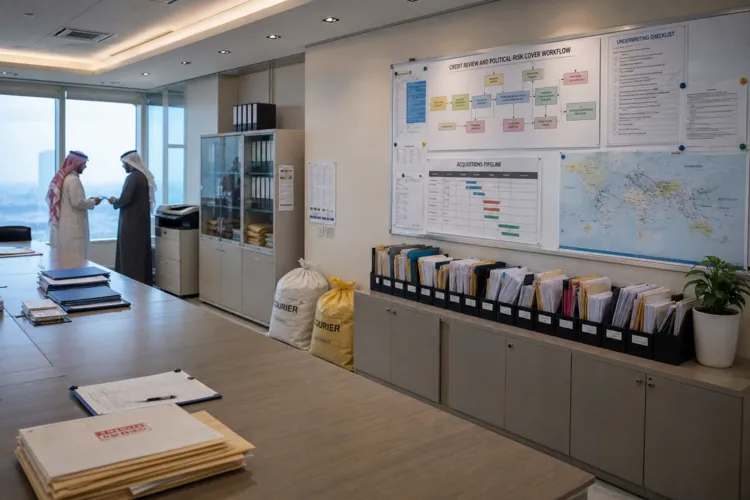

Saudi Arabia’s private sector is heavily influenced by multi-generational, family-owned groups. Family businesses make up over 95 percent of all private enterprises, contribute more than 60 percent of non-oil GDP, and employ millions of people across the nation, according to WealthBriefing. That scale matters when ownership transitions arrive. For many conglomerates, succession is not only a family decision but also a capital and governance decision. In that context, M&A can become a structured route to separate operating control from ownership, create liquidity for some shareholders, or bring in partners who can support the next phase of growth.
Families are also making these calls in a market where dealmaking momentum is visible and measurable. LSEG reported MENA mergers and acquisitions reached $115.5 billion in the first half of 2025, a 149 percent increase over the same period last year, and the highest first-half total since LSEG began tracking the data in 1980. In the same period, the UAE drew $39.8 billion in M&A inflows, followed by Saudi Arabia at $3.5 billion. These figures do not explain any single family’s decision, but they describe a region where deal flow is active enough to make a sale, merger, or partial divestment more feasible than in a thin market.
Why the M&A Environment Is Changing the Succession Playbook
Several structural signals point to a more mature process around transactions. Arab News reported that Saudi Arabia’s General Authority for Competition approved a record 202 economic concentration requests in January. These approvals are required for mergers and acquisitions to ensure they do not create monopolies or disrupt market competition. For families thinking about generational transfer, that kind of process can push succession conversations toward formal options: a strategic sale, a merger to create scale, or bringing in a cross-border partner. EY has also cited improved capital markets, international investor interest, and regulatory liberalization as primary drivers behind deal activity involving Saudi Arabia and the UAE.
Cross-border activity is a defining feature of the current cycle. EY reported MENA M&A reached $106.1 billion in 2025, up 15 percent from the previous year, with 884 deals, a 26 percent year-on-year increase. Cross-border transactions accounted for 54 percent of total deal volume and 61 percent of value. This matters for succession because family conglomerates can look beyond local buyers and consider international strategic partners, or investors with different time horizons. EY also said sovereign wealth funds in the region, including Saudi Arabia’s PIF, remained primary catalysts of M&A activity, which can further shape who shows up as a potential counterparty.
At the same time, alternatives to a full sale are also gaining visibility through public markets. Forbes Middle East reported that Saudi Arabia’s equity capital market kept strong momentum in the first half, with six companies raising a combined $2.8 billion through IPOs on Tadawul. For families navigating Saudi family business succession, this can influence deal design. Some may consider a merger or a private transaction as a bridge to an eventual listing, while others may view an IPO as a way to professionalize governance while still managing control. McKinsey also notes favorable macroconditions across the UAE, Saudi Arabia, and the broader GCC, including supportive fiscal and regulatory reforms and enhanced investor confidence, suggesting elevated M&A activity may continue into 2026.
Why is succession pushing some Saudi family conglomerates toward M&A?
What do the latest MENA deal figures suggest about the transaction climate?
How important are cross-border deals in MENA M&A right now?
What signals show Saudi Arabia’s M&A process is becoming more formalized?
How can IPOs relate to Saudi family business succession planning?
Talk to us for your needs in:
-
Due Diligence and Valuation Services
-
M&A Strategy and Advisory
-
Post-Merger Integration Management
-
Regulatory and Compliance Advisory
-
Market Entry and Expansion Consulting
-
Investment and Financial Analysis
-
In-Depth Market Survey for M&A
-
Market Intelligence and Insights in M&A
-
Feasibility Study and Assessment in M&A
-
Saudi M&A Benchmarking