Saudi Arabia’s green hydrogen story is being built through dealmaking. The clearest pattern in the sources is not buyouts, but joint ventures, financing, and cross-border agreements. In practice, this is the core of “Saudi green hydrogen M&A” today: partners combine assets, split risk, and lock in routes to market.
At the center is Neom Green Hydrogen Co. (NGHC). Arab News says the project is designed around long-term export agreements to help develop a global hydrogen market. It is powered by 4 GW of integrated solar and wind, and it converts hydrogen into green ammonia because hydrogen cannot easily be shipped as a gas.
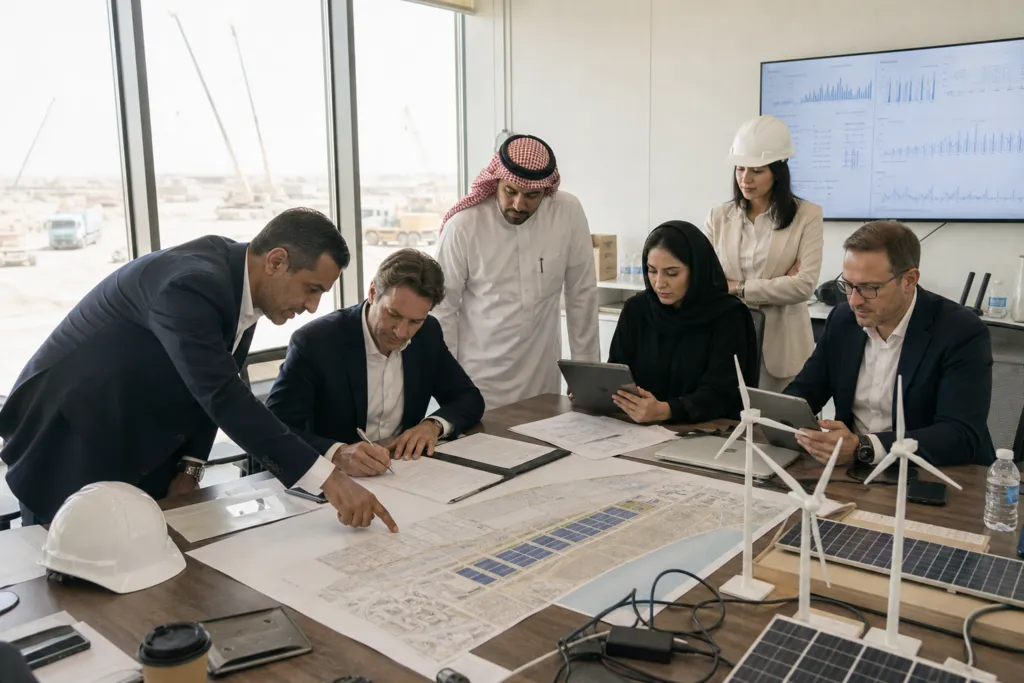
Several sources describe NGHC as a joint venture between ACWA Power, Air Products, and NEOM. This structure matters because it connects developers, technology, and global offtake capability under one project company. It also reflects how the Kingdom is assembling a workforce and supply chain, while preparing for operational testing and system validation before full-scale production.
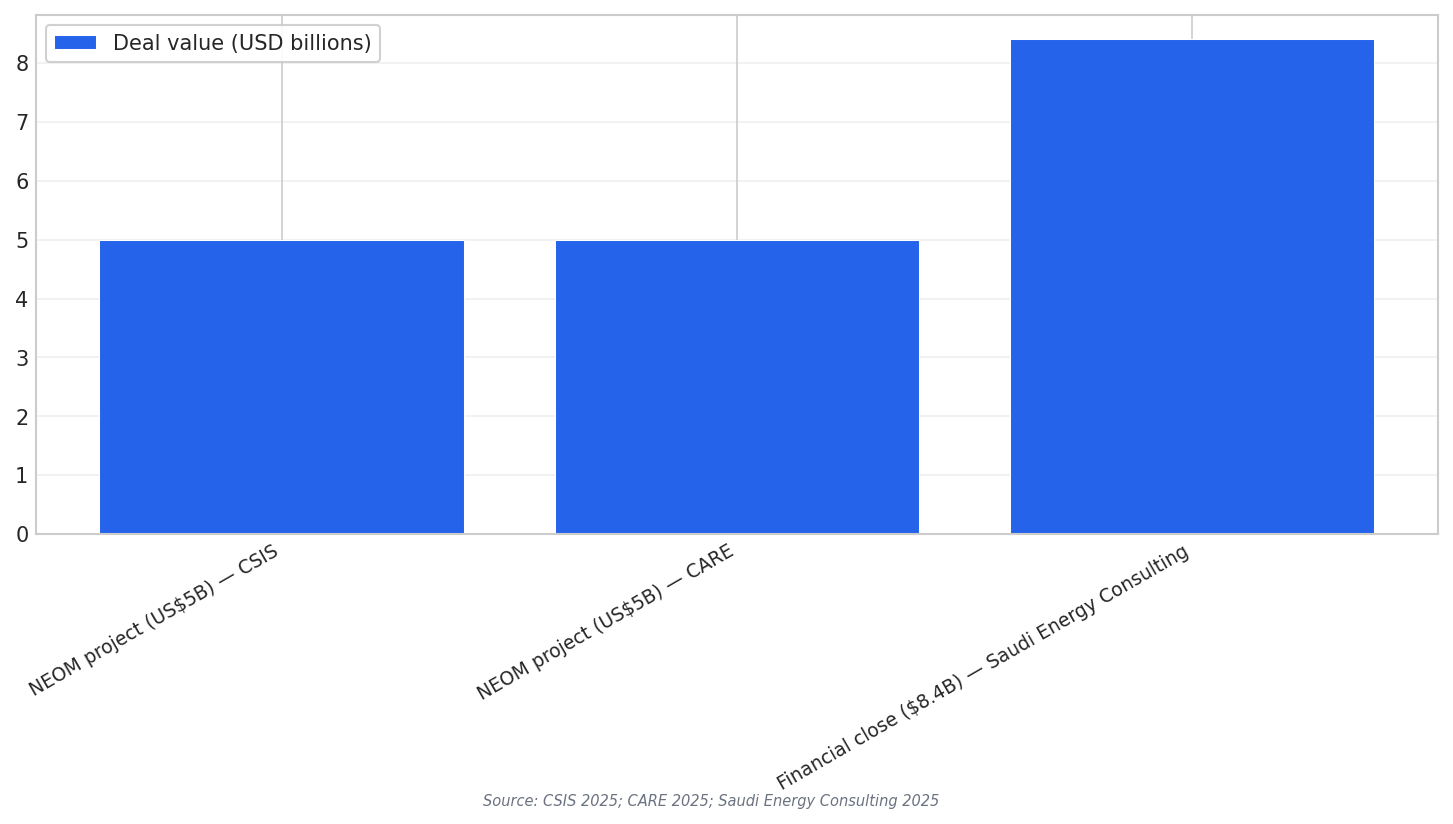
Across the sources, the NEOM project is described with different investment figures: US$5 billion (CSIS and CARE) and $8.4 billion financial close in 2023 (Saudi Energy Consulting). The same project is also described as being around 80% complete as of early 2025. These figures show how multiple “deal layers” can sit around one mega-project, from early project framing to later financing and completion milestones.
Why Deals Matter More Than Announcements
NGHC’s build-out also shows why mergers and acquisitions are only one piece of the puzzle. The sources point to real execution constraints: supply chains, infrastructure, and skilled labor. NGHC’s CEO, Wesam Al-Ghamdi, links the effort to Vision 2030, describing a pathway toward economic diversification, clean energy leadership, and net zero by 2060.
Other agreements extend the strategy beyond Neom. CSIS notes a Memorandum of Understanding between Aramco and Korea’s Hyundai OilBank Co. The plan is to take liquefied petroleum gas cargoes from Aramco, convert the LPG into hydrogen, and ship the CO2 emitted in the process back to Saudi Arabia. This is another form of dealmaking that can shape future hydrogen trade and carbon handling routes.
What does “Saudi green hydrogen M&A” look like in practice?
Why is NEOM converting green hydrogen into ammonia?
How is the NEOM Green Hydrogen Project powered?
What big challenges does the hydrogen industry still face in Saudi Arabia?
Talk to us for your needs in:
-
Due Diligence and Valuation Services
-
M&A Strategy and Advisory
-
Post-Merger Integration Management
-
Regulatory and Compliance Advisory
-
Market Entry and Expansion Consulting
-
Investment and Financial Analysis
-
In-Depth Market Survey for M&A
-
Market Intelligence and Insights in M&A
-
Feasibility Study and Assessment in M&A
-
Saudi M&A Benchmarking