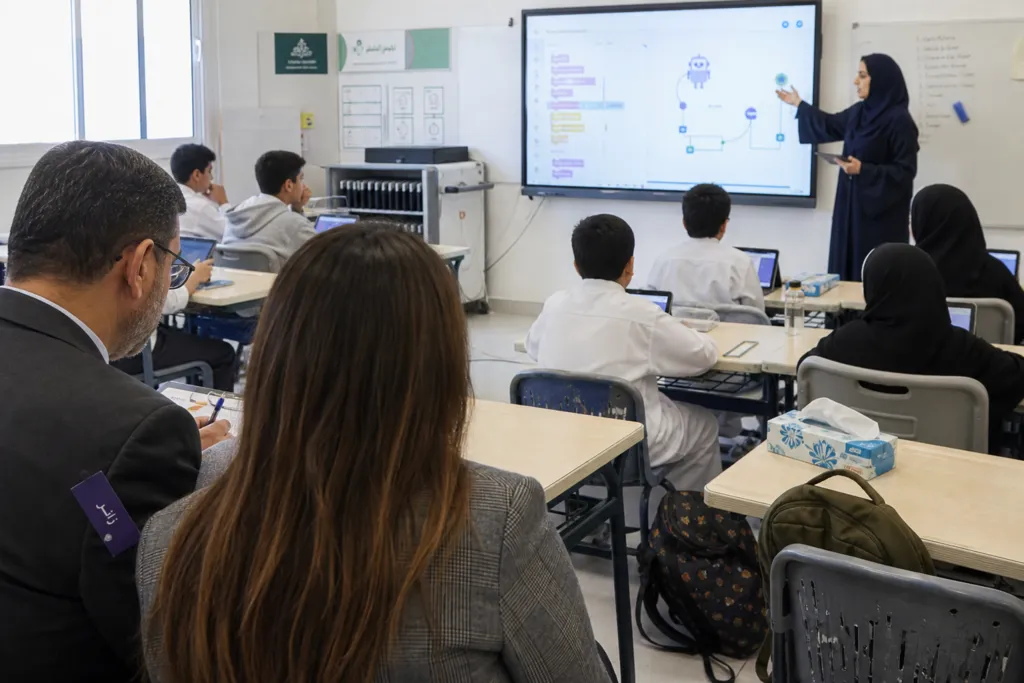
Saudi Arabia has announced a comprehensive move to integrate artificial intelligence education across all public school levels starting in the 2025–2026 academic year. The curriculum was created jointly by the National Curriculum Center, the Ministry of Education, the Ministry of Communications & IT, and the Saudi Data & Artificial Intelligence Authority (SDAIA). The stated design is progressive AI literacy, from early primary stages through secondary education, with emphasis on foundational digital skills, ethical awareness, and innovation capacity. For Saudi edtech M&A, this national deployment changes what “strategic fit” looks like. Buyers can seek targets that already align to curriculum structure, assessment, and deployment across the public system.
A pilot phase shows what national-scale demand can look like in practice. Earlier in 2025, Saudi Arabia piloted an “Introduction to Artificial Intelligence” elective for third-year high school students, engaging over 50,000 students across the Kingdom. That single figure matters for acquisition logic. It signals real usage at meaningful scale before the full rollout. In M&A terms, it raises the value of platforms that can handle wide deployment, content updates, and operational support. It also rewards products that can be implemented consistently, because the curriculum is framed as a national rollout strategy rather than isolated school-by-school adoption.
At the same time, Saudi Arabia is positioning itself as a broader AI hub, which can indirectly raise the ceiling for education technology deployment. A report cited by Consultancy-me.com says 50% of the kingdom’s deep tech startups are already focused on developing AI and the Internet of Things (IoT), and that the nation aims for AI to contribute 12% of gross domestic product by 2030. The same source notes Saudi Arabia took 14th place globally and first in the Arab world in the Global AI Index for 2024. In Saudi edtech M&A, this backdrop supports long-term appetite for AI-linked learning tools, but acquirers still need to connect capabilities to the specific requirements of the school curriculum rollout.
How AI Infrastructure Deals Change Edtech M&A Integration
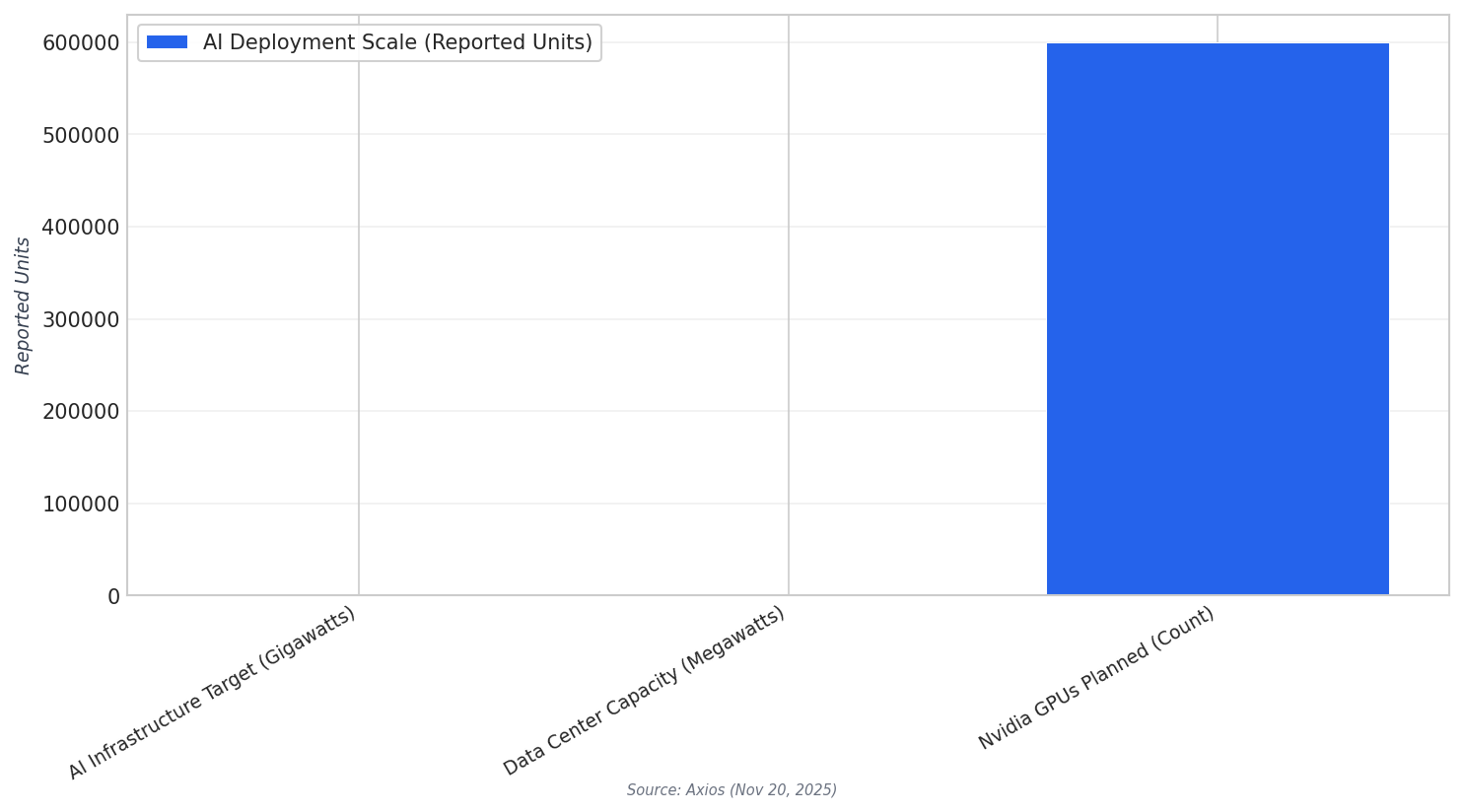
Infrastructure is becoming part of the education story, even when the deals are not education-specific. Axios reports that Humain, a Saudi AI and infrastructure developer backed by the Public Investment Fund, is working with AMD and Cisco to deliver up to 1 gigawatt of AI infrastructure by 2030. Axios also reports that Humain will deploy up to 600,000 Nvidia GPUs across Saudi Arabia and the U.S. over three years, and that Qualcomm will create an AI engineering center with Humain in Riyadh as part of a broader partnership to deploy 200 megawatts of data center capacity. These figures create an M&A implication: post-merger integration can prioritize cloud and compute readiness for content generation, analytics, and large-scale usage spikes during curriculum delivery.
Dealmakers can also look outside K-12 to understand what AI-native education platforms are trying to automate, then map those capabilities back into national school needs. Ynetnews reports that the combined Collage AI and StudyWise platform aims to help educators generate personalized exams and assignments, automate grading of open-ended responses, detect knowledge gaps, and support students’ academic growth and career development, while integrating with existing Learning Management Systems (LMS). For Saudi edtech M&A, such capabilities can be evaluated as modular building blocks for a curriculum rollout: assessments, content generation workflows, teacher support, and LMS compatibility. The key is not copying another market’s product, but acquiring implementation-ready components that can align to the Kingdom’s curriculum partners and deployment approach.
Finally, acquirers should separate global market narratives from Saudi-specific execution requirements. Two AInvest articles discuss broad EdTech-AI claims and projections, including statements that the EdTech-AI sector offers a market poised for $112 billion in value by 2034, and that cloud-based AI platforms account for 71.9% of the AI EdTech market in 2025, alongside a projected $92.09 billion valuation by 2033. These are not Saudi-only numbers, but they reinforce the investor logic behind consolidation. In Saudi Arabia, the hard constraint is operational: a national AI curriculum across all public school levels, starting 2025–2026, will reward companies that can deploy, train, and support at scale, which is exactly what a well-structured Saudi edtech M&A thesis should target.
What is driving Saudi edtech M&A right now?
What proof exists that Saudi schools are already engaging with AI coursework?
How do Humain’s infrastructure partnerships relate to education rollouts?
Which product capabilities are attractive in an AI-focused education acquisition?
Talk to us for your needs in:
-
Due Diligence and Valuation Services
-
M&A Strategy and Advisory
-
Post-Merger Integration Management
-
Regulatory and Compliance Advisory
-
Market Entry and Expansion Consulting
-
Investment and Financial Analysis
-
In-Depth Market Survey for M&A
-
Market Intelligence and Insights in M&A
-
Feasibility Study and Assessment in M&A
-
Saudi M&A Benchmarking