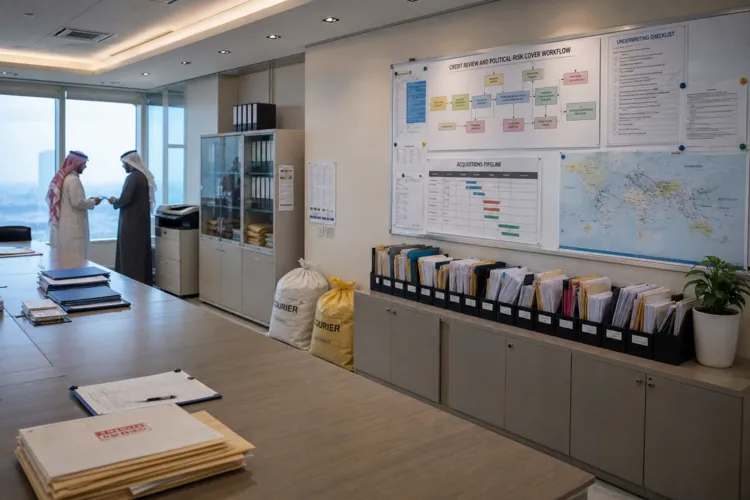

SABIC operates as a Saudi chemical manufacturing company active in petrochemicals, chemicals, industrial polymers, and fertilizers, with 70% of its shares owned by Saudi Aramco. Its footprint spans 43 countries, with 60 manufacturing and compounding facilities and a customer base in more than 140 countries. The company’s technology and innovation base includes 20 technology centers and service locations, over 2,000 R&D professionals, more than 11,000 patents as of December 2024, and 135 new products introduced. That platform matters for how SABIC evaluates what to keep, what to exit, and how to structure partnerships as it pivots toward specialty materials.
A key inflection point was SABIC’s October 2015 restructuring. The company absorbed commodity chemicals from the Innovative Plastics SBU into the Chemicals and Polymers SBUs, created a Specialties SBU for the remaining Innovative Plastics products that did not fit the commodity umbrella, and set the Innovative Plastics SBU to cease to exist by January 1, 2016. The shift signals a practical approach to separating businesses by margin profile and strategic role. In the deal arena, this kind of segmentation helps define clearer asset boundaries, which can translate into more targeted transactions and more disciplined decision-making around Saudi petrochemical M&A.
How Divestments and Aramco Alignment Restructure Deal Logic
SABIC’s 2025 Integrated Annual Report describes divestments of its European Petrochemicals (EP) and Engineering Thermoplastics (ETP) businesses in the Americas and Europe for a combined Enterprise Value of US$ 950 Mn. The report frames these actions as a continuation of recently completed divestitures, including Functional Forms, Hadeed, and Alba, and says the moves are expected to provide focus on competitively advantaged positions in Saudi Arabia and ensure capital is optimized. The same report notes a long-term credit rating upgrade to Aa3 by Moody’s in 2025, following an upgrade of Saudi Arabia’s sovereign rating. Taken together, these disclosures show how portfolio reshaping can be paired with capital allocation discipline, influencing which assets are positioned for sale, carve-out, or reinvestment.
In Saudi Arabia, broader investment context reinforces why deal structures are evolving. One market report values the Saudi Arabia petrochemical market at USD 52.6 billion and notes the government committed over SAR 75 billion for new initiatives in 2024. Sector narratives also point to structural change through Aramco’s COTC strategy, described as potentially adding 10-15 million tonnes of incremental chemical production capacity by 2035. The same source describes a specialty chemicals pivot that is “well underway,” with investment in performance polymers, engineering plastics, electronic chemicals, and pharmaceutical intermediates. When investment pathways include joint ventures, typical equity splits are described as ranging from 50/50 to 70/30 with Saudi majority, alongside options such as technology licensing and partnerships.
This is the backdrop for how “dealmaking” gets redefined. SABIC’s own restructuring history shows it can reorganize around what is commodity versus specialty, while 2025 disclosures highlight continued divestments intended to sharpen focus on Saudi-advantaged positions. Industry commentary also points to an ambition for the Specialties SBU: a target to become a top player in a “Multi-Segment Premium” sector that could drive EBITDA margins above 20% by 2026. In practice, that kind of target can influence what a buyer pays for a specialty-oriented platform versus a commodity-heavy asset base. It can also affect how transaction scopes are written, with clearer logic for bolt-ons, carve-outs, and joint ventures tied to technology, compounding, and downstream customer needs.
What did SABIC change in its 2015 restructuring?
What divestments did SABIC report for 2025?
How large is the Saudi Arabia petrochemical market in the cited report?
How could SABIC’s specialties pivot influence Saudi Arabia’s petrochemical dealmaking?
What is Aramco’s COTC strategy described as potentially adding by 2035?
Talk to us for your needs in:
-
Due Diligence and Valuation Services
-
M&A Strategy and Advisory
-
Post-Merger Integration Management
-
Regulatory and Compliance Advisory
-
Market Entry and Expansion Consulting
-
Investment and Financial Analysis
-
In-Depth Market Survey for M&A
-
Market Intelligence and Insights in M&A
-
Feasibility Study and Assessment in M&A
-
Saudi M&A Benchmarking