Saudi logistics consolidation in 2026 is being pulled toward “platform over asset” models. Buyers are paying for the ability to aggregate fleets, couriers, warehouses, and customs workflows into one operating system, rather than just adding vehicles or square meters. The demand backdrop is clear in the Kingdom’s last-mile outlook: the Saudi Arabia last mile delivery market is projected at USD 0.86 billion in 2026 and is forecast to reach USD 1.25 billion by 2031, growing at a 7.81% CAGR from 2026 to 2031. E-commerce is the immediate catalyst, with 118 million transactions in Q1 2026, up 49% year-on-year. Those volumes intensify the value of tech that improves routing, fulfillment speed, and first-attempt success.
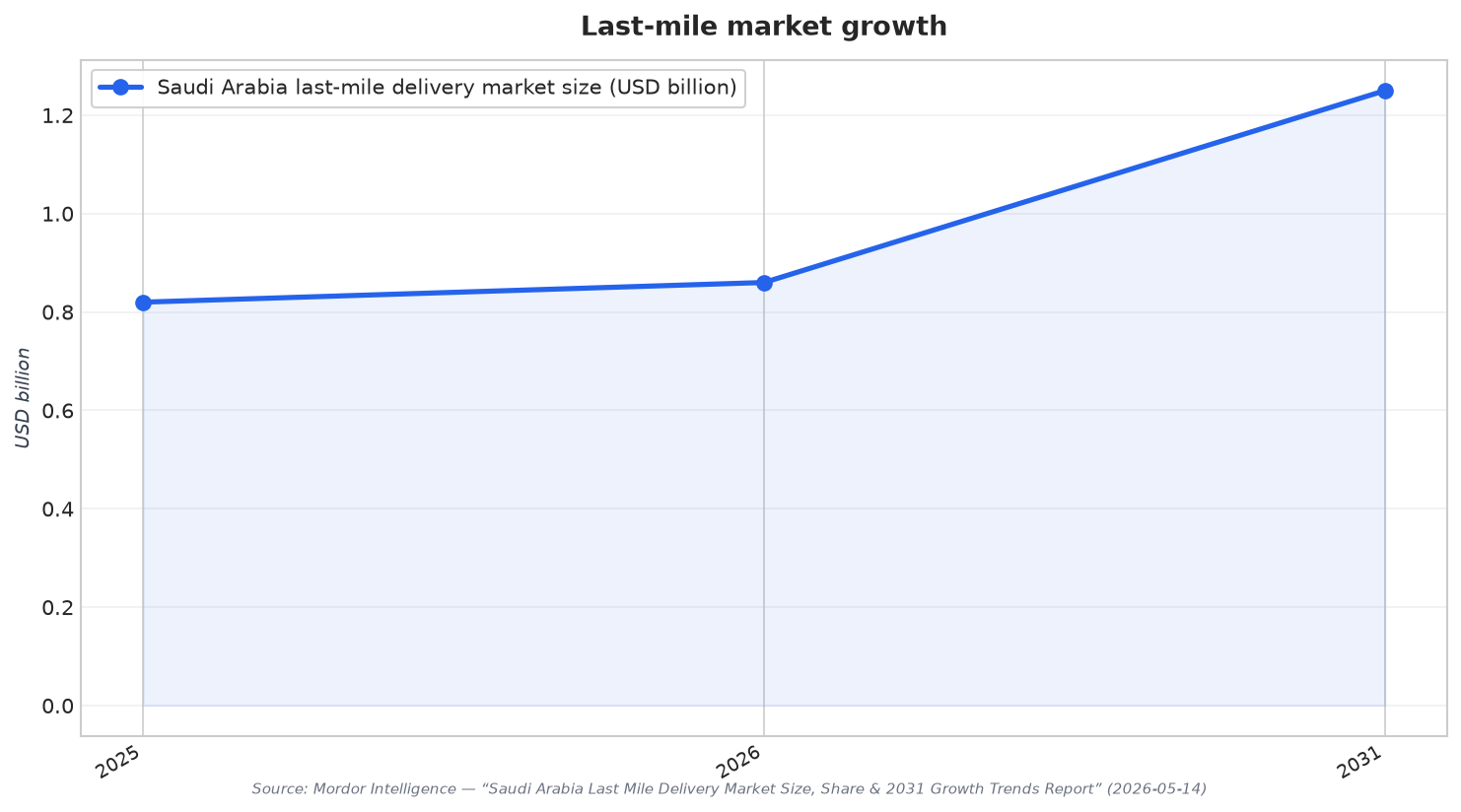
Platform-driven M&A logic also maps to how service mix is changing in last mile. Standard delivery held 62.57% market share in 2025, but same-day delivery is projected to expand at a 9.46% CAGR through 2031. B2C represented 71.6% of market size in 2025, while C2C is the fastest-growing, at a 9.58% CAGR, supported by recommerce platforms. Riyadh’s density matters too, with Riyadh alone generating 44% of orders, and the Central region accounting for 45.76% of deliveries in 2025. These patterns favor acquirers that can plug multiple delivery partners into one consumer experience and one data layer, while adjusting coverage by region and service promise.
Why 2026 Favors Orchestration Platforms in Deals
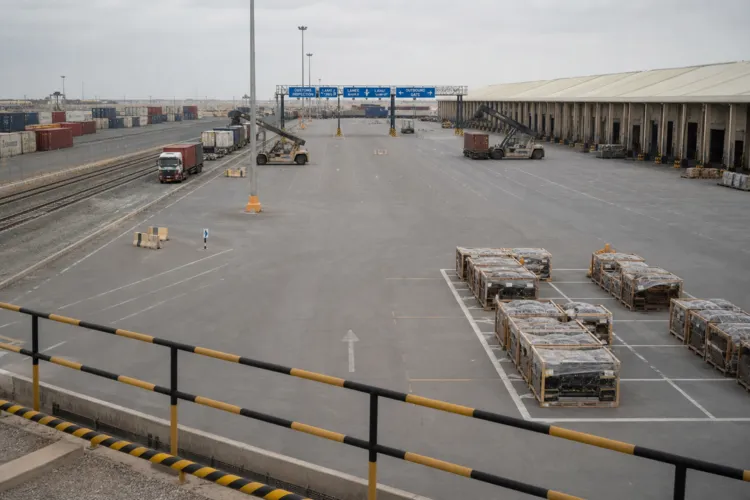
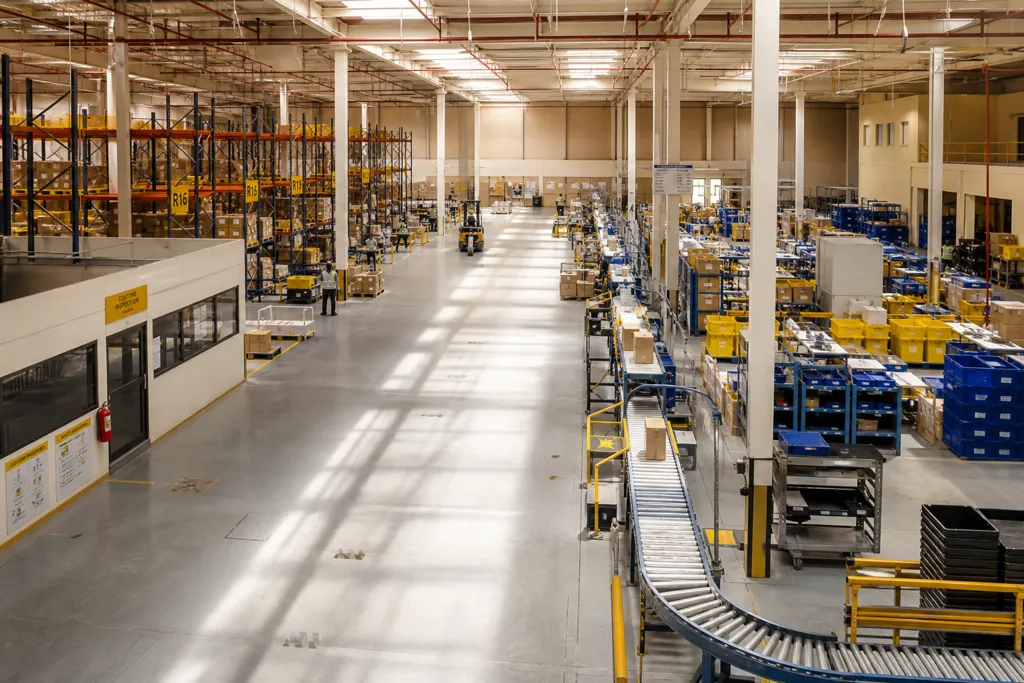
Two structural shifts make orchestration capabilities more valuable than owning every asset. First, compliance and standardization are becoming deal filters. April 2024 courier-licensing reforms formalized 37 operators, channeling gig deliveries into compliant networks and raising service standards. Second, customs and bonded infrastructure are compressing time-to-door in ways that reward digital integration. The Special Integrated Logistics Zone at King Khalid International Airport spans 32 million ft² and offers duty-deferred storage and automated clearance, with average e-parcel customs release times below two hours. The national LOGISTI single-window streamlines documentation. Together, these changes increase the premium on operators that can connect merchants, inventory, and clearance processes into a single, measurable workflow.
Broader logistics segments reinforce the same direction for Saudi logistics M&A 2026: buy the platform that scales across outsourced services. MarkWide Research values the Saudi Arabia 3PL market at $12.8 billion in 2026, projecting growth to $27.12 billion by 2035 at an 8.70% CAGR. Mordor Intelligence estimates the contract logistics market at USD 1.27 billion in 2026, reaching USD 1.51 billion by 2031 at a 3.52% CAGR, with retail and e-commerce at 26.60% of contract logistics market size in 2025. In project logistics, the market stands at USD 2.27 billion in 2026 and is forecast to reach USD 3.04 billion by 2031 at a 6.13% CAGR, and transportation led with 64.32% of revenue in 2025. That mix can encourage acquisitions that bundle specialized execution with unified visibility and KPI-based service levels.
In practice, 2026 deal strategies are likely to cluster around three priorities: speed, compliance, and cross-border optionality. The Western corridor is the fastest-growing last-mile geography, with an 8.29% CAGR through 2031, while healthcare and medical supplies in last mile are advancing at a 9.74% CAGR to 2031, pushing requirements for reliability and controlled handling. On the freight side, regulatory liberalization now permits international operators to serve domestic line-haul lanes once reserved for Saudi-flag fleets. Mordor notes DSV’s 29-facility network already handles 6% of Saudi import volumes, illustrating how foreign entrants use scale and digital visibility. The winners in M&A will be the groups that can integrate these pieces quickly, using platforms to turn fragmented capacity into consistent service.
What is shaping Saudi logistics M&A in 2026 more than pure asset buying?
How big is Saudi Arabia’s last-mile delivery market in 2026?
Which last-mile segments are growing fastest through 2031?
What signals show e-commerce intensity in Saudi Arabia in 2026?
How does bonded e-commerce infrastructure support platform-style consolidation?
Talk to us for your needs in:
-
Due Diligence and Valuation Services
-
M&A Strategy and Advisory
-
Post-Merger Integration Management
-
Regulatory and Compliance Advisory
-
Market Entry and Expansion Consulting
-
Investment and Financial Analysis
-
In-Depth Market Survey for M&A
-
Market Intelligence and Insights in M&A
-
Feasibility Study and Assessment in M&A
-
Saudi M&A Benchmarking