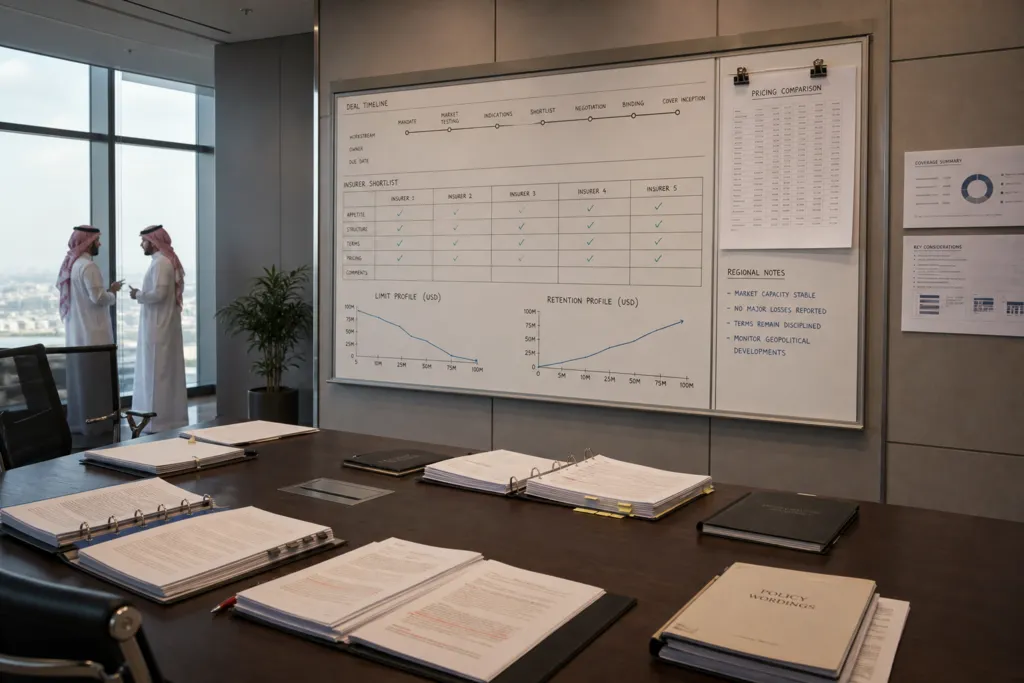
Warranty and indemnity (W&I) insurance is becoming harder to ignore in Saudi M&A. Saudi Arabia led GCC dealmaking in 2025, and insured transactions increasingly reflect a buyer-led focus on protection. In Marsh’s Middle East and Africa activity for 2025, buyer-side policies represented 82 percent of transactions, which signals where negotiation leverage and risk sensitivity are concentrated. That shift matters in Saudi transactions because it changes how sellers think about escrows, indemnities, and “who holds the risk” after closing. Instead of leaving exposures solely with the buyer or tying up seller proceeds in large indemnity escrows, M&A insurance can shift much of that risk to an insurer and make a deal less adversarial, a dynamic highlighted by The Coyle Group’s dealmaking perspective.
Context also helps explain why W&I is being pulled into the conversation now. Marsh reported more than 100 warranty and indemnity insurance inquiries across the Middle East and Africa in 2025, pointing to growing familiarity among investors and advisers across the region. The same Marsh update cited $1.5 billion in transactional risk insurance limits placed in 2025, with an average deal size of $438 million, spanning sectors such as energy, technology, financial services, industrials, real estate, education, and healthcare. For Saudi buyers and sellers, these figures are regional signals, not Saudi-only totals. Still, they show that the advisory ecosystem is structuring larger transactions with dedicated risk-transfer tools, rather than treating W&I as a niche add-on reserved for only the biggest sponsors.
Why Pricing and Market Structure Make the Middle East Stand Out
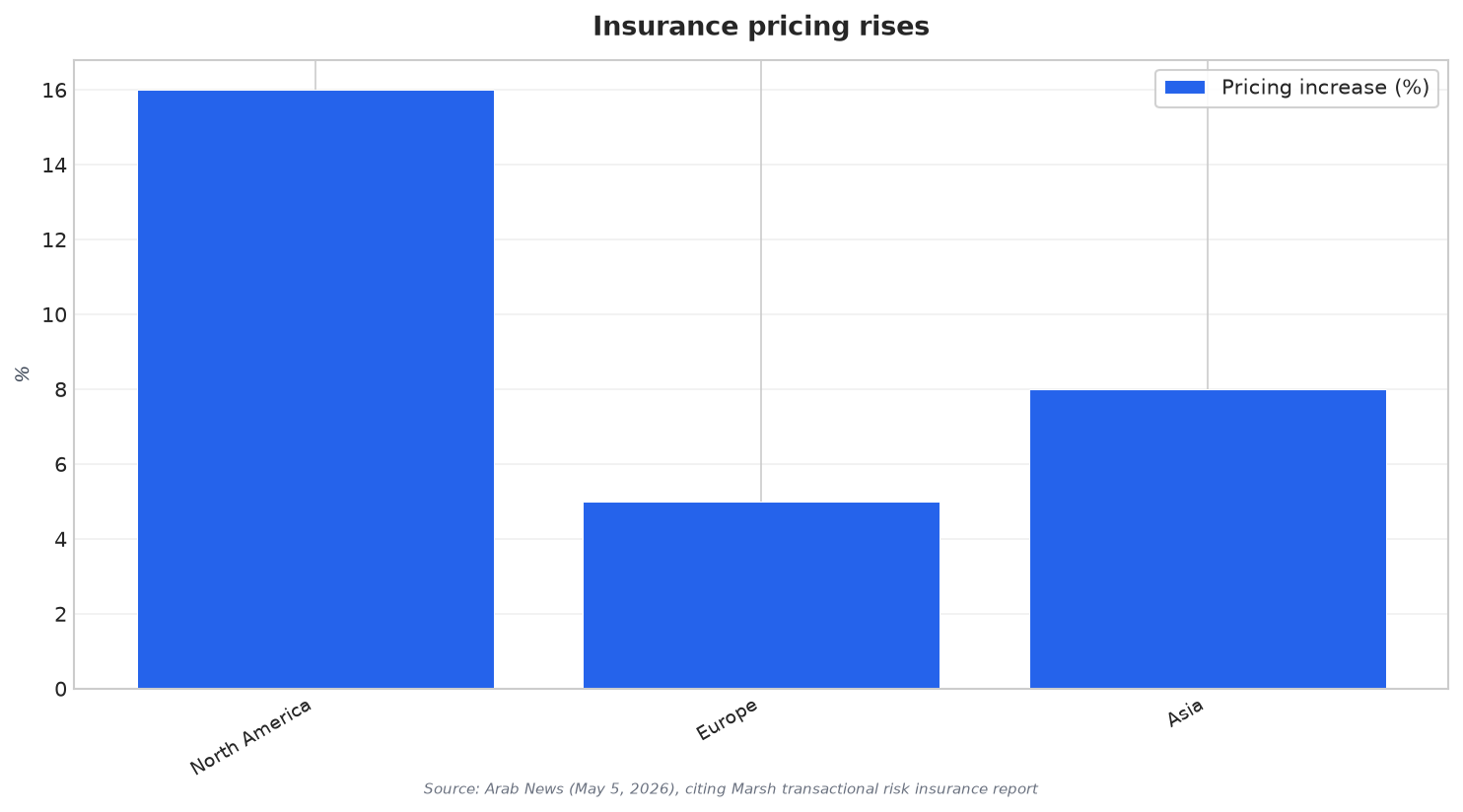
Pricing dynamics are a key reason the Middle East is being described as appealing for structuring transactions with W&I insurance. Marsh noted that the region diverged from global insurance pricing trends, maintaining historically low premium rates even as costs rose elsewhere. As a comparison point, pricing increased by 16 percent in North America, 5 percent in Europe, and 8 percent in Asia. Those increases are not Saudi figures, but they frame why regional buyers may be more willing to explore cover when negotiating terms and transaction timetables. Separate global market commentary from Gallagher also supports the idea that transactional insurance solutions are now standard instruments across geographies, sectors, and deal sizes, from enterprise values below £5 million to multi-billion-pound transactions, with coverage terms described as broadly favorable for buyers.
Saudi Arabia’s wider insurance market backdrop also points to expanding capacity and underwriting appetite, which can influence how advisors think about transactional risk. Mordor Intelligence projects the Saudi Arabia property and casualty insurance market (premium value) will expand from USD 9.62 billion in 2025 and USD 11.17 billion in 2026 to USD 23.59 billion by 2031, registering a CAGR of 16.12 percent between 2026 and 2031. The same source states penetration remains low at 1.5 percent, and highlights a mandatory 30 percent local reinsurance cession rule enacted in November 2024 that redirects premium flows to domestic reinsurers. These are broad P&C indicators, not W&I-specific measures, but they help explain why deal teams are increasingly willing to ask whether Saudi warranty indemnity insurance can be slotted into a transaction alongside legal due diligence and negotiated indemnities.
In practice, W&I tends to show up when parties want faster agreement on indemnity caps, fewer escrow demands, and cleaner post-close economics. Marsh also reported that strategic investors accounted for 61 percent of insured deals in 2025, a reminder that this is not only a private equity tool in the regional market context. Globally, Gallagher observed plentiful capacity and continued expansion in 2025, including an approximately 17 percent year-on-year rise in submissions reported by one global insurer, alongside an estimated 5 percent increase in average deal value. For Saudi transactions, the takeaway is not to copy foreign pricing or structures, but to recognize that the toolset is maturing. As advisers and investors normalize W&I usage, it becomes easier to design a Saudi deal that allocates risk intentionally, rather than leaving it to late-stage negotiation pressure.
What signals growing adoption of W&I insurance in Saudi-related dealmaking?
Why do buyer-side W&I policies matter in negotiations?
How does the Middle East compare with other regions on pricing trends?
How do broader Saudi insurance trends support interest in transactional risk cover?
How is Saudi warranty indemnity insurance used to de-risk a deal?
Talk to us for your needs in:
-
Due Diligence and Valuation Services
-
M&A Strategy and Advisory
-
Post-Merger Integration Management
-
Regulatory and Compliance Advisory
-
Market Entry and Expansion Consulting
-
Investment and Financial Analysis
-
In-Depth Market Survey for M&A
-
Market Intelligence and Insights in M&A
-
Feasibility Study and Assessment in M&A
-
Saudi M&A Benchmarking