A Cenomi mall REIT carve-out is best understood as a portfolio reshuffle idea: separating selected mall assets into a cleaner pool that can be financed, valued, and potentially exited through institutional channels. Cenomi Centers has scale to even consider that kind of move. One source describes a nationwide portfolio of 20 malls and an industry-leading 18% market share, serving nearly 80% of the Kingdom’s population and comprising more than 4,500 retail stores across shopping malls, community centers, and lifestyle destinations (industry data as of December 2023). Another profile states the company has 21 locations across 10 cities and brings together over 109 million visitors annually. This footprint makes capital structure choices, asset packaging, and ownership formats especially material for investors tracking Saudi retail real estate.
Operating momentum is a key input into any carve-out discussion because footfall and tenant sales feed leasing demand and rental reversion. Cenomi’s mall visits rose from 84 million visitors in 2020 to 127 million visitors in 2025, a 2020–2025 CAGR of 8.6%, broadly in line with a Saudi consumer spending CAGR of 8.9% over the same period. That growth story matters because discretionary categories such as fashion, F&B, entertainment, and lifestyle are explicitly cited as part of the company’s exposure. If a carve-out were designed around assets with strong footfall trajectories, the data points above become the simple, measurable narrative that can travel across lenders, sukuk investors, or future institutional buyers.
Why Carve-Out Structures and REIT Plays Fit the Saudi Capital-Market Backdrop
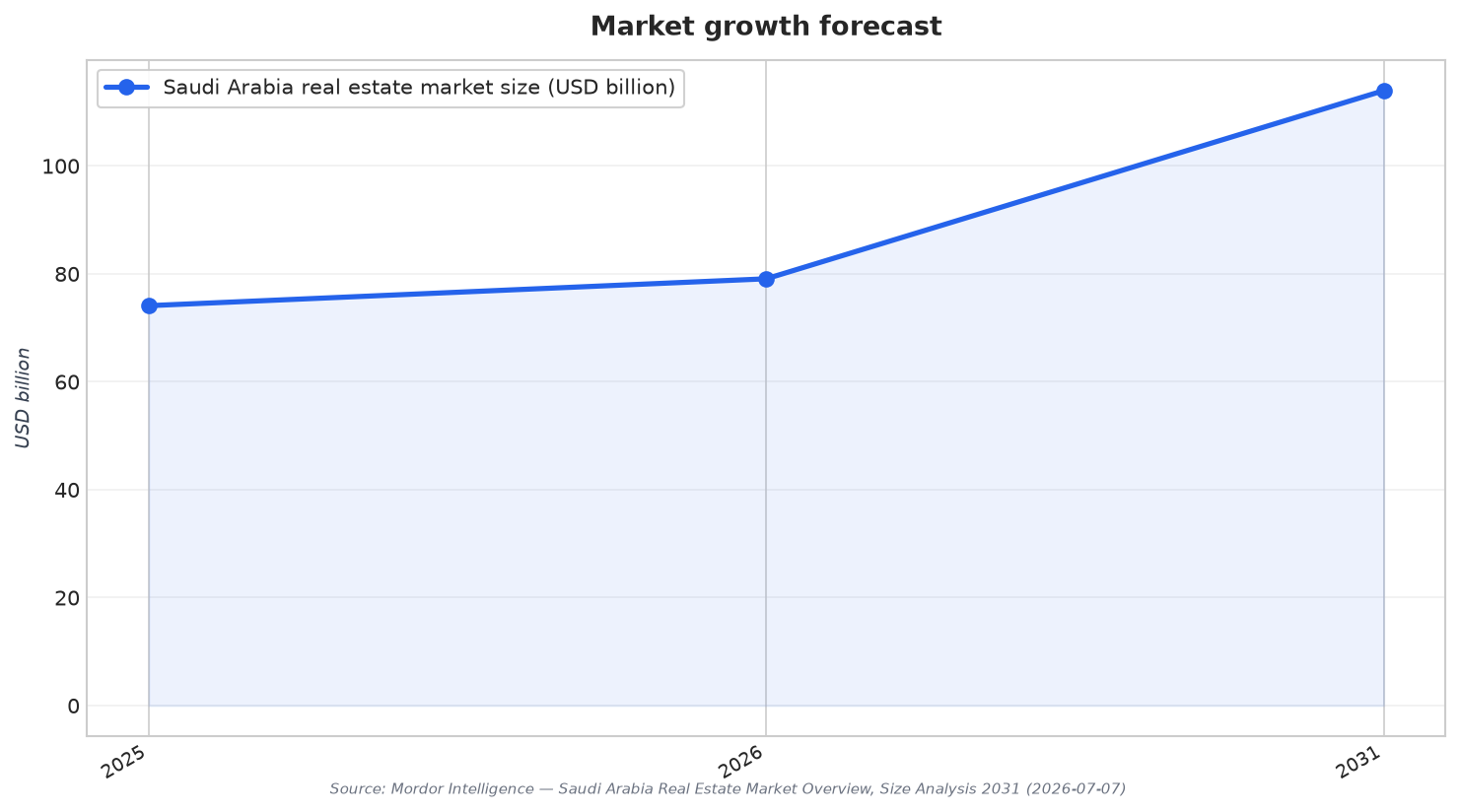
Saudi Arabia’s broader real estate backdrop supports more structured ownership and exit routes, which is where REIT “plays” enter the conversation. Mordor Intelligence projects the Saudi Arabia real estate market to expand from USD 74.11 billion in 2025 and USD 79.09 billion in 2026 to USD 113.96 billion by 2031, a CAGR of 7.58% between 2026 and 2031. The same source points to capital-market reforms that broaden institutional participation and notes regulatory upgrades such as expanded REIT rules. For comparison, IMARC values the Saudi Arabia real estate market at USD 77.2 billion in 2025 and expects it to reach USD 141.6 billion at a CAGR of 6.73% during 2026–2034. Even with different methodologies, both sources frame a growing market where institutional formats can matter more.
Capital-market signal is also visible at the company level. A Cenomi Centers profile cites commentary from Alison Rehill-Erguven that strong demand exceeding SAR 2 billion for the company’s inaugural SAR sukuk reflects market confidence and contributes to the development of Saudi Arabia’s domestic debt capital markets. In a carve-out or REIT-style pathway, that matters because it shows there is appetite for structured real estate-linked issuance. Separately, Mordor Intelligence highlights Public Investment Fund (PIF) financing of at least USD 40 billion a year as a liquidity support in the wider market context, alongside reforms that create new exit routes for global investors. These are not mall-specific guarantees, but they help explain why portfolio reshuffles can be timed to evolving financing depth.
For investors, the key is staying precise about what is being “reshuffled.” Cenomi’s scale indicators—20 malls and 18% market share in one source, and 21 locations in another—set the stage for selective packaging rather than a one-size-fits-all approach. Meanwhile, Saudi market structure is shifting: sales dominated with 65.1% share in 2025, while the rental segment is set to grow at a 7.85% CAGR through 2031. Riyadh led with a 41.5% share of the real estate market in 2025, and Dammam Metropolitan Area posts the highest projected CAGR at 8.41% to 2031. A well-designed carve-out thesis can align asset selection with these market dynamics, while using footfall growth and capital-market demand as the core, auditable story.
What does a Cenomi mall REIT carve-out mean in practice?
What operating metric supports the mall reshuffle narrative?
How large is Saudi Arabia’s real estate market in the cited forecasts?
What capital-market signal is mentioned for Cenomi Centers?
Talk to us for your needs in:
-
Due Diligence and Valuation Services
-
M&A Strategy and Advisory
-
Post-Merger Integration Management
-
Regulatory and Compliance Advisory
-
Market Entry and Expansion Consulting
-
Investment and Financial Analysis
-
In-Depth Market Survey for M&A
-
Market Intelligence and Insights in M&A
-
Feasibility Study and Assessment in M&A
-
Saudi M&A Benchmarking