Saudi Aramco is assembling LNG access outside the kingdom, even as Saudi Arabia consumes all its natural gas output domestically and has no LNG facilities. The strategy, as described in multiple reports, is to build a portfolio of LNG volumes from projects abroad and then trade them. Amin Nasser, Aramco’s chief executive, has said the company is aiming for a long-term LNG portfolio of 20 million tons per year. Aramco has also been described as increasingly involved in spot LNG activity, with cargoes sent to Bangladesh, Egypt, and China in recent months.
The US has become a central arena for this expansion. Aramco’s push began in 2023, when it bought a $500 million minority stake in US-based LNG company MidOcean Energy. Another report said Aramco expanded its stake in MidOcean to 49%. The logic is two-pronged: Aramco can gain exposure to liquefaction projects via MidOcean while also locking in supply through separate purchase agreements. Samuel Good of London Stock Exchange Group described this as a dual approach, combining stakes in liquefaction with supply deals to build scale and optionality.
MidOcean Equity, Commonwealth Volumes, NextDecade Supply: One Portfolio, Different Levers
On the supply side, Commonwealth LNG has emerged as a key counterpart. Saudi Aramco signed a long-term agreement with Commonwealth LNG to supply 1 million metric tonnes per annum (mtpa), with an option to double volumes to 2 mtpa. A separate report also described Aramco as expected to purchase up to 2 million tonnes per annum from the planned Commonwealth LNG export project on the US Gulf Coast near Cameron, Louisiana. Commonwealth is developing an integrated LNG export facility in Cameron that is designed to have total capacity of 9.5 mtpa, and the Aramco agreement was described as supporting Commonwealth’s effort to sell 8 mtpa of capacity ahead of construction.
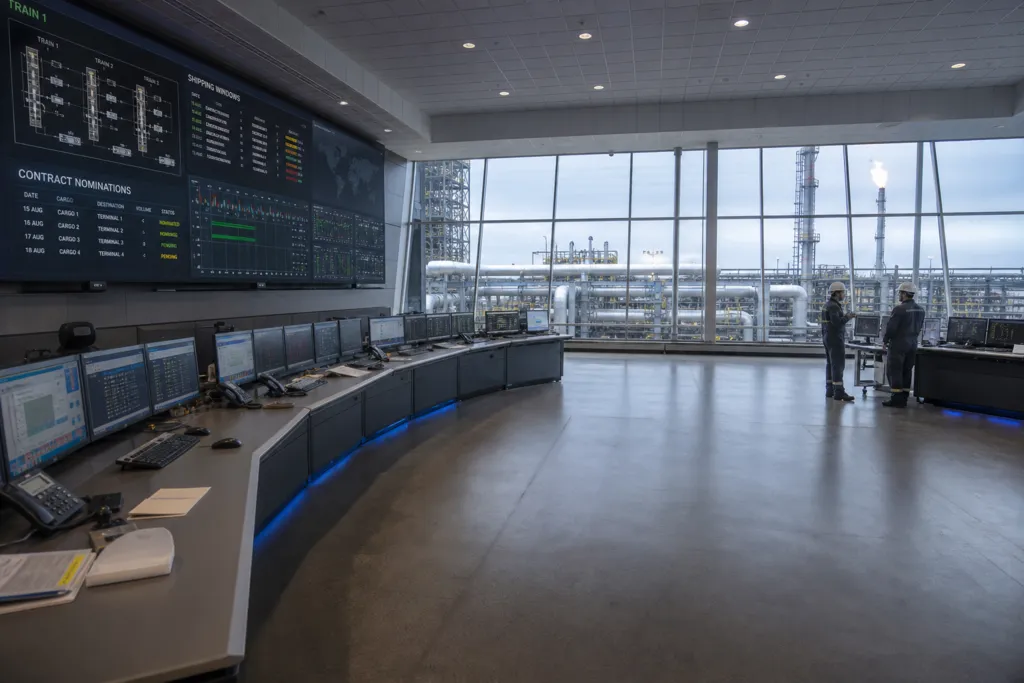
NextDecade’s Rio Grande LNG project in Texas is another pillar. NextDecade signed a 20-year sale and purchase agreement with an Aramco subsidiary for 1.2 million tonnes per annum of LNG from Train 4 on a free-on-board basis, priced against Henry Hub. The agreement is conditional on NextDecade taking FID on Train 4, which it sanctioned in September, and NextDecade expects Train 4 to reach substantial completion in the second half of 2030, when deliveries under the Aramco contract would begin. Reuters also reported 20-year supply agreements tied to NextDecade’s Rio Grande terminal and Commonwealth’s proposed Louisiana project.
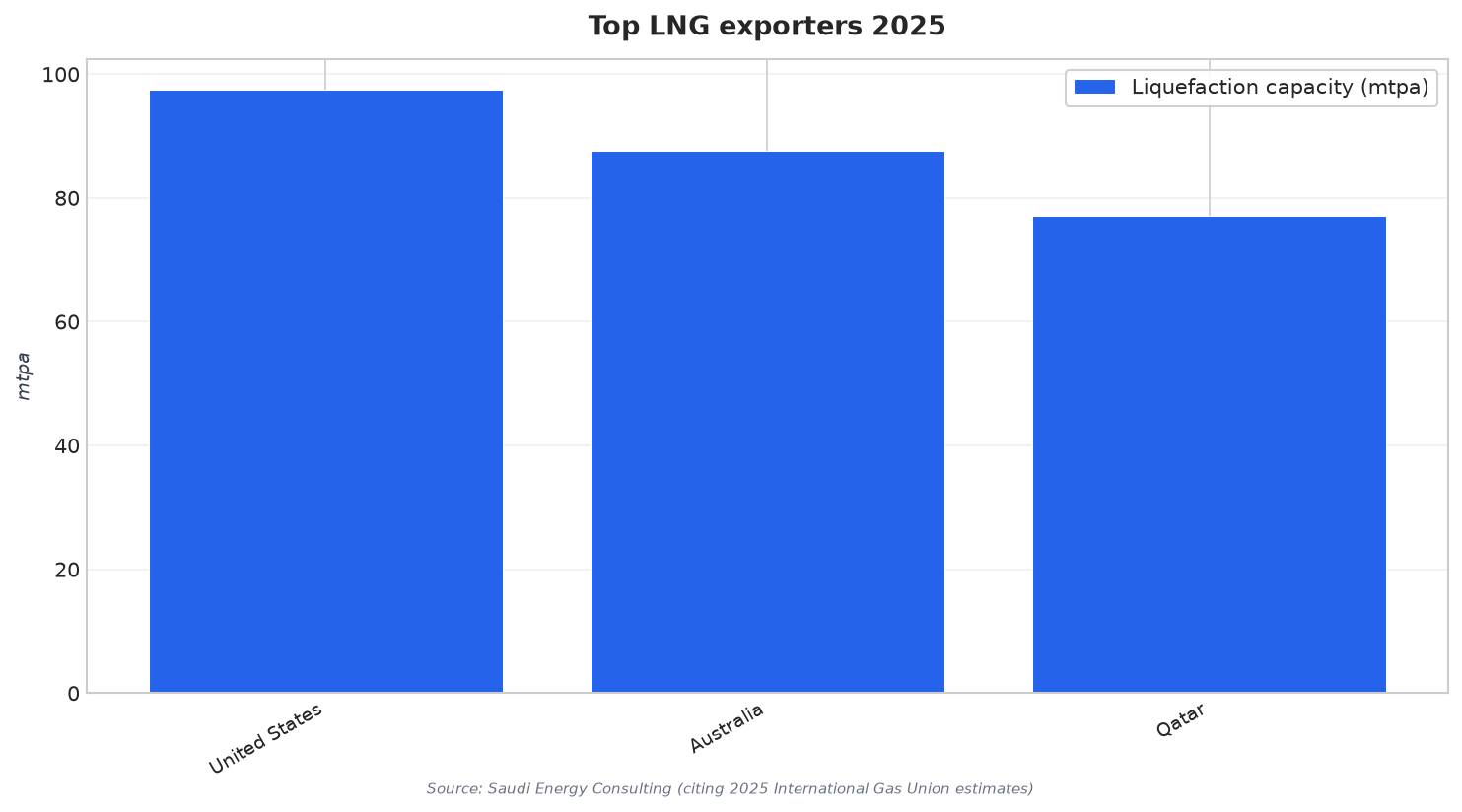
These moves sit inside a global LNG market where scale is increasingly visible in capacity comparisons. The 2025 International Gas Union estimated global liquefaction capacity totals nearly 500 million tonnes per annum, listing the United States at 97.5 mtpa, Australia at 87.6 mtpa, and Qatar at 77.1 mtpa. Aramco’s US-facing activity has been framed as part of a broader ramp-up in dealmaking, including major preliminary agreements with US firms that were described as potentially worth tens of billions. For Aramco, the cross-border gas play is about building tradable LNG access and maintaining flexibility on where cargoes ultimately flow, subject to provisions such as sanctions.
What is Aramco trying to achieve with its US LNG strategy?
What did Aramco do with MidOcean Energy, and when?
How much LNG is involved in the Commonwealth LNG agreement?
What are the key details of the NextDecade Rio Grande agreement with an Aramco subsidiary?
Why are the Aramco US LNG deals described as a cross-border gas play?
Talk to us for your needs in:
-
Due Diligence and Valuation Services
-
M&A Strategy and Advisory
-
Post-Merger Integration Management
-
Regulatory and Compliance Advisory
-
Market Entry and Expansion Consulting
-
Investment and Financial Analysis
-
In-Depth Market Survey for M&A
-
Market Intelligence and Insights in M&A
-
Feasibility Study and Assessment in M&A
-
Saudi M&A Benchmarking