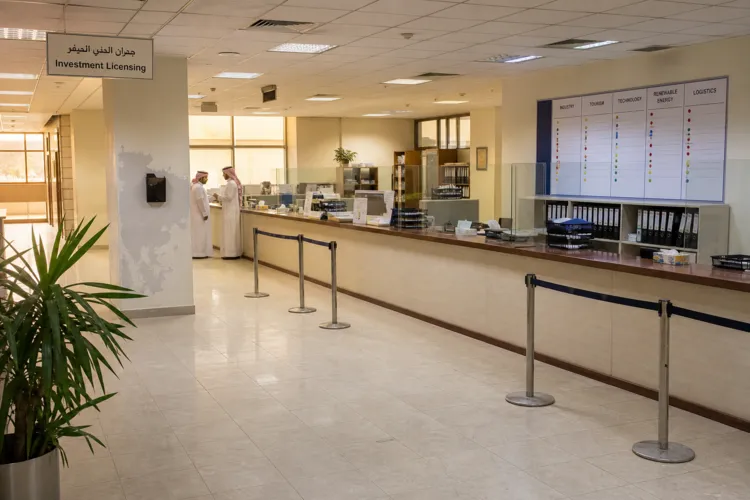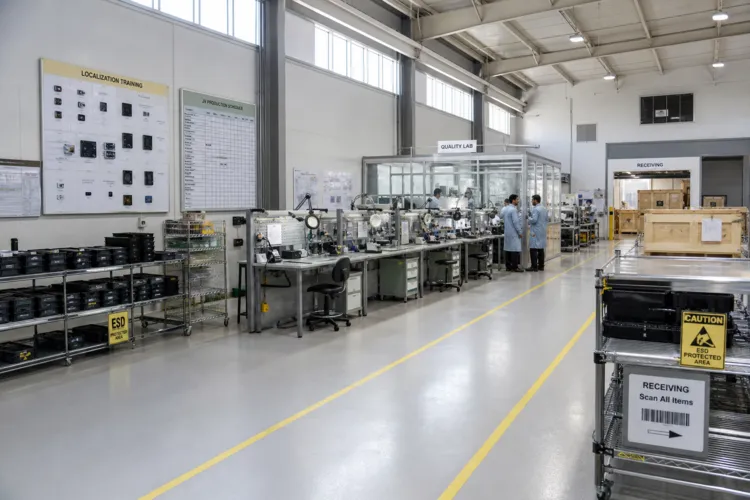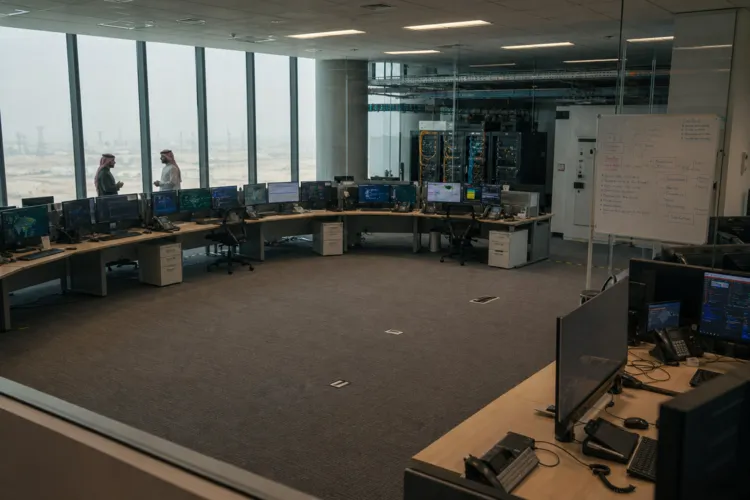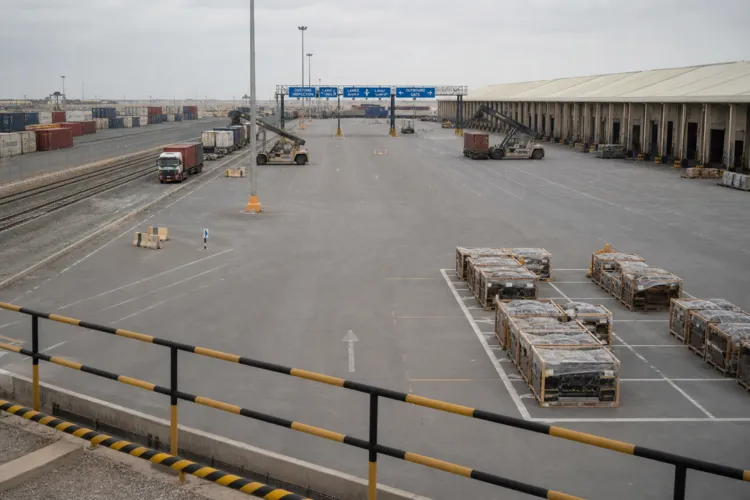
Riyadh’s Regional Headquarters (RHQ) Programme has become one of Saudi Arabia’s most commercially consequential policy levers. It was launched in February 2021 by the Ministry of Investment (MISA) and the Royal Commission for Riyadh City (RCRC) to authorise multinational groups to run a MENA-wide administrative centre from the Kingdom. It is not a trading permit, and an RHQ itself is barred from revenue-generating commercial activity, which must sit in separately licensed affiliates. Even so, the programme has shifted corporate decision-making geography by tying access to state business to where the regional centre is based.
The core “stick” took effect on 1 January 2024. From that date, a foreign company without a licensed RHQ in Saudi Arabia cannot be awarded a central-government or state-entity contract worth more than SAR 1 million (about $266,000). The policy also has documented exemptions, including contracts under SAR 1 million, purchases executed outside the Kingdom, sole technically acceptable bidder situations, and cases where the best technically scored bid is priced at least 25% below the second-best technical proposal. Enforcement is described as active, including the circulation of non-compliant multinational lists to government entities, and procurement refinements in 2025 to clarify exemptions and ease edge-case enforcement.
Incentives, “Presence” Rules, and What the Licence Count Does (and Doesn’t) Prove
The “carrot” is sizeable and time-bound. Companies that take an RHQ licence can receive 30 years of 0% corporate income tax and 0% withholding tax on eligible activities, plus a 10-year exemption from Saudisation percentage requirements. One guide also describes 250 work visas allocated from day one and accelerated visas for senior executives and dependants. Separately, a market analysis notes that “presence” is defined in practice: companies must have a regional base in the Kingdom with at least 15 employees, including executives overseeing other countries. This mix helps explain why coverage often frames Saudi RHQ program acquisitions less as simple office moves and more as formalised changes in regional governance.
By the first quarter of 2026, more than 780 international firms held RHQ status, exceeding original Vision 2030 targets that sources describe as 480 by 2030 or 500 by 2030. One report adds that these firms were “actively maintaining a physical presence in Riyadh” per CBRE’s Q1 2026 review. However, the same coverage cautions against over-reading the headline number. MISA publishes a licence count, not headcount, floor space, payroll, or a public operational-status register. Put simply, the numerator is visible, but the denominator for how deep, staffed, or decision-making these presences are has not been released.
What is visible is how the programme affects real decisions and real estate. One insight links the RHQ wave to a Grade A office vacancy near 3% in Q1 2026, with prime rents at SAR 3,630 per square metre in King Abdullah Financial District. On the company side, PwC relocated its Riyadh office to Laysen Valley into an expanded space of 22,400 square metres across eleven stories, housing its full Riyadh team including Strategy&. Accenture announced a Connected Innovation Center in Riyadh and said its Saudi workforce grew by around 60% over the last two years, alongside collaborations with SAP and AWS and training through its LearnVantage Academy. Financial services show both movement and caution: the Financial Times reported that Goldman Sachs and Morgan Stanley opened regional headquarters in Riyadh, while also noting some institutions remain reluctant to fully commit due to regulatory concerns.
What changed on 1 January 2024 under Saudi Arabia’s RHQ Programme?
How many companies had RHQ status by Q1 2026?
What incentives are offered to RHQ-licensed companies?
What do sources say about Saudi RHQ program acquisitions and “presence” in Riyadh?
Talk to us for your needs in:
-
Due Diligence and Valuation Services
-
M&A Strategy and Advisory
-
Post-Merger Integration Management
-
Regulatory and Compliance Advisory
-
Market Entry and Expansion Consulting
-
Investment and Financial Analysis
-
In-Depth Market Survey for M&A
-
Market Intelligence and Insights in M&A
-
Feasibility Study and Assessment in M&A
-
Saudi M&A Benchmarking