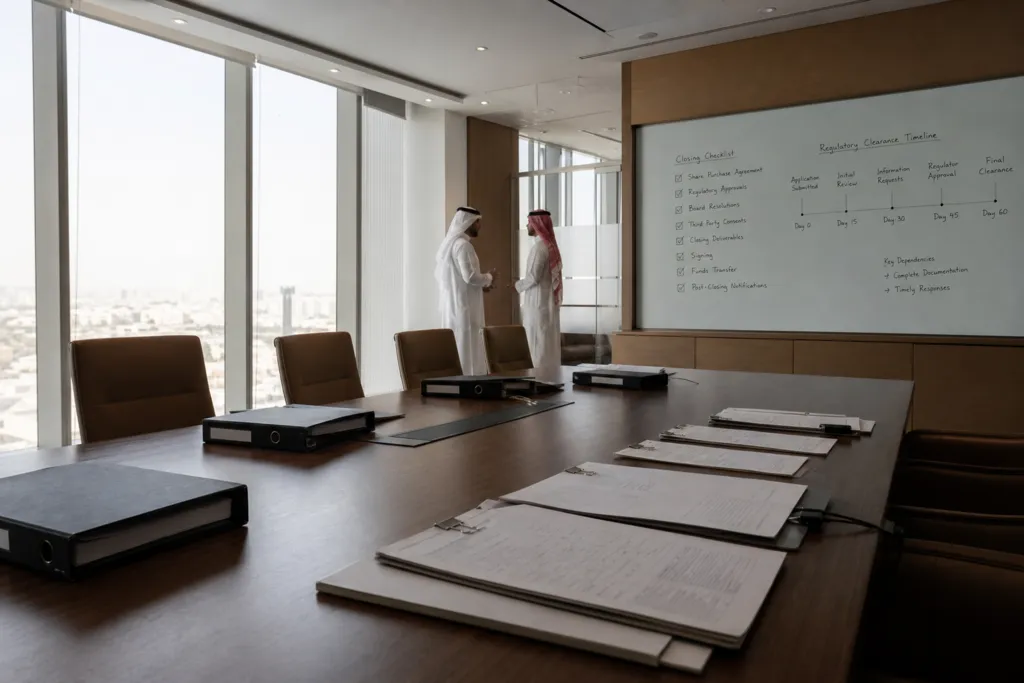
Fakeeh Care moved from negotiations to a binding agreement and then to closing in its acquisition of Dr. Mohammed Bin Rashed Al Fagih & Partners Co. (Al Fagih). Fakeeh Care signed a binding share purchase agreement to buy 100% of Al Fagih for SAR 1.6 billion in banknotes, building on a non-binding offer that was first flagged back in November. The acquisition later closed, and Al Fagih was consolidated as a wholly owned subsidiary. The transaction was described as all-cash and required regulatory sign-off, including a General Authority for Competition non-objection, alongside other consents and no regulatory roadblocks.
What Fakeeh bought was a single 350-bed multi-specialty hospital in central-east Riyadh. The hospital opened in October 2022 and was operating 238 beds and 109 outpatient clinics at the time described, within a 192-clinic, 93k sqm complex. Fakeeh already had a 185-bed hospital in Riyadh, and adding Al Fagih’s 350 beds created a 535-bed, two-site cluster. Fakeeh also positioned the acquisition as a way to broaden its payer mix, adding cashpay patients and Class B / Network 6 insured volumes to a model it said traditionally skewed toward VIP and top-tier insurance.
Inside the Minority Exit Mechanics: Who Sold, What They Got, and the Conditions
The seller lineup mattered because this was not a single-owner transaction. The disclosed shareholders included Dallah Healthcare with 31.21%, founder Dr. Mohammed Rashid Al Fagih with 18.2%, and 38 minority holders accounting for the remaining 50.59% (also cited as 50.6%). Under the agreement, Fakeeh Care acquired 100% from all current shareholders for SAR 1.60 billion, and Dallah’s share of proceeds was SAR 497.98 million, also disclosed as SAR 497,983,407. Dallah also disclosed that the book value of its stake stood at SAR 101.84 million as of December. The agreement could lapse after six months from signing if conditions were not satisfied or waived, and it included provisions around confidentiality, termination, and dispute resolution.
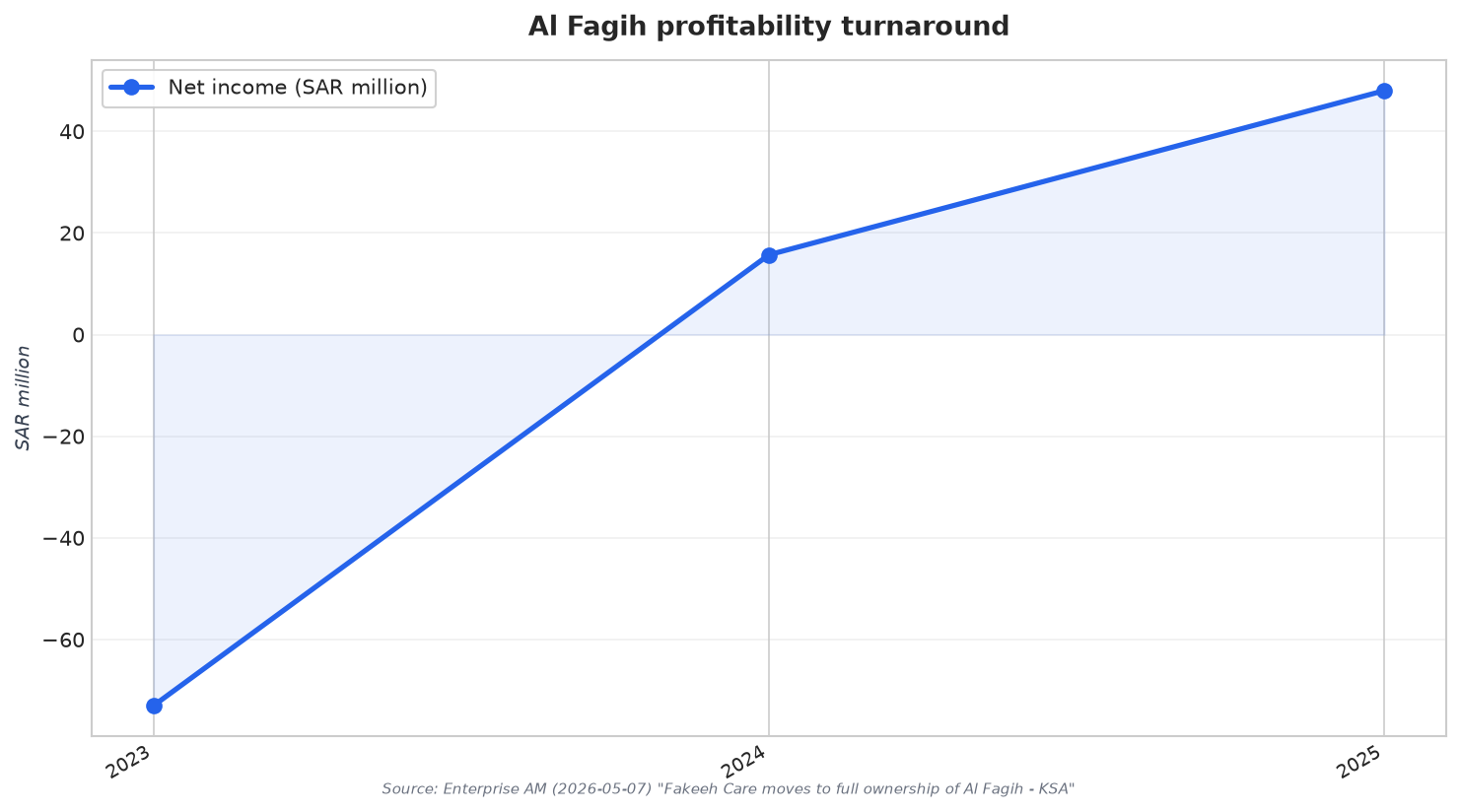
Operational momentum at the asset helped frame the Dallah Al-Fagih hospital exit as a sale into a business that had moved through early-stage volatility. Al Fagih swung from a net loss of SAR 73 million in 2023 to a net income of SAR 15.7 million in 2024, rising to over SAR 48 million in 2025. Revenue increased 24% to SAR 466 million in 2025, more than double the SAR 213 million booked in 2023. For Fakeeh, the strategic pitch was cost synergies and “revenue cross-pollination,” paired with a larger footprint in what was described as Riyadh’s increasingly crowded private-hospital market.
Financing and advisory lines show how the deal was executed and supported. Fakeeh said it would pay using a mix of self-financing and bank debt on terms in line with its existing credit lines. After the deal, Fakeeh secured SAR 2.2 billion across two shariah-compliant credit facilities: SAR 1.25 billion from Saudi National Bank and SAR 950 million from Saudi Awwal Bank. On advisors, PwC was cited as financial advisor and White & Case as counsel in one set of disclosures, while another disclosure cited Alpha Capital as a joint financial advisor to selling shareholders (including Dallah) and Khoshaim & Associates as legal advisor. In sector context, the transaction was described as part of a steady drumbeat of consolidation among the Kingdom’s listed hospital operators.
How much was Fakeeh Care’s acquisition of Al Fagih worth?
Who exited in the Dallah-Al Fagih hospital exit transaction?
How much did Dallah receive for selling its stake?
What capacity did the acquisition add to Fakeeh’s Riyadh footprint?
What were the key conditions and timing terms in the SPA?
Talk to us for your needs in:
-
Due Diligence and Valuation Services
-
M&A Strategy and Advisory
-
Post-Merger Integration Management
-
Regulatory and Compliance Advisory
-
Market Entry and Expansion Consulting
-
Investment and Financial Analysis
-
In-Depth Market Survey for M&A
-
Market Intelligence and Insights in M&A
-
Feasibility Study and Assessment in M&A
-
Saudi M&A Benchmarking