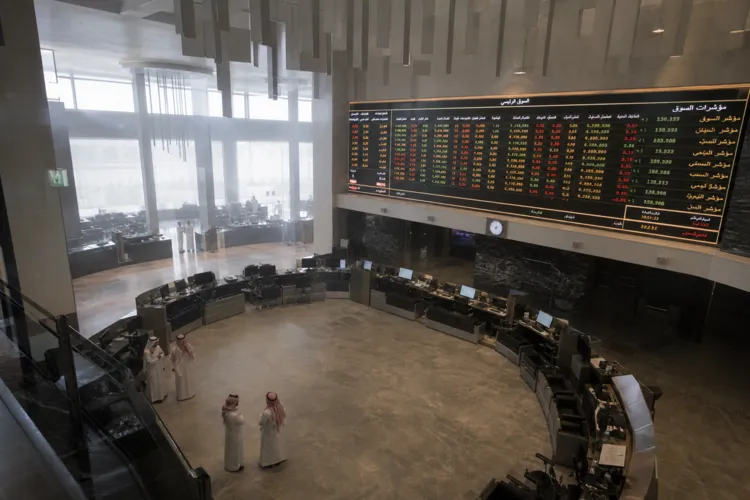
Deal-making by Gulf buyers accelerated rather than paused as the Iran war began. Bloomberg reported that UAE, Saudi Arabia, and Gulf peers spent $47 billion on deals since the conflict began, and that Gulf acquisitions rose more than 120% over that period. The same framing matters because it runs counter to a broader slowdown in global M&A values. Taken together, those points help explain why observers started to treat 2026 as a distinct chapter for cross-border activity tied to Gulf sovereign capital, even as the war injected new uncertainty into markets.
Multiple sources describe the same pattern: capital stayed in motion, and much of it headed to developed markets. A June 2026 Global SWF report, cited by both The National and IndexBox, said state-controlled funds within the six-member GCC manage $5.7 trillion in aggregate assets and have largely maintained the pace of quarterly investments during the conflict. Global SWF said these vehicles showed “no sign of slowdown,” with a stronger average pace in the past quarter than in the five years before the war. The National added that most second-quarter capital flowed into developed market assets.
War Risk, Portfolio Reviews, and Why Spending Didn’t Freeze
The persistence of buying does not mean strategies were static. Reuters reported on March 11 that three Gulf states are reviewing how they deploy trillions of dollars invested by their sovereign wealth funds to anticipate offsetting losses linked to the U.S.-Israeli war on Iran. Reuters stressed the reassessment covers global holdings, not only U.S. assets, even though the U.S. is already one of the biggest destinations for Gulf sovereign money. Semafor also noted that Gulf sovereign wealth funds maintained their pace of investments in the first quarter, even though nearly a third of that period occurred during the war.
Global SWF’s detail on fund-by-fund behavior shows why the “steady pace” narrative can still produce visible shifts in where money lands. IndexBox reported that only the Qatar Investment Authority reduced its pace, investing about $2 billion less per quarter since March 1. By contrast, four of the region’s five most prolific spenders—Abu Dhabi Investment Authority (ADIA), Mubadala Investment Company, L’imad in the UAE, and Saudi Arabia’s Public Investment Fund—maintained their record of investment over the past five years. IndexBox also said ADIA is about $1.1 trillion in assets and that the UAE’s total sovereign assets hit $3.08 trillion in March.
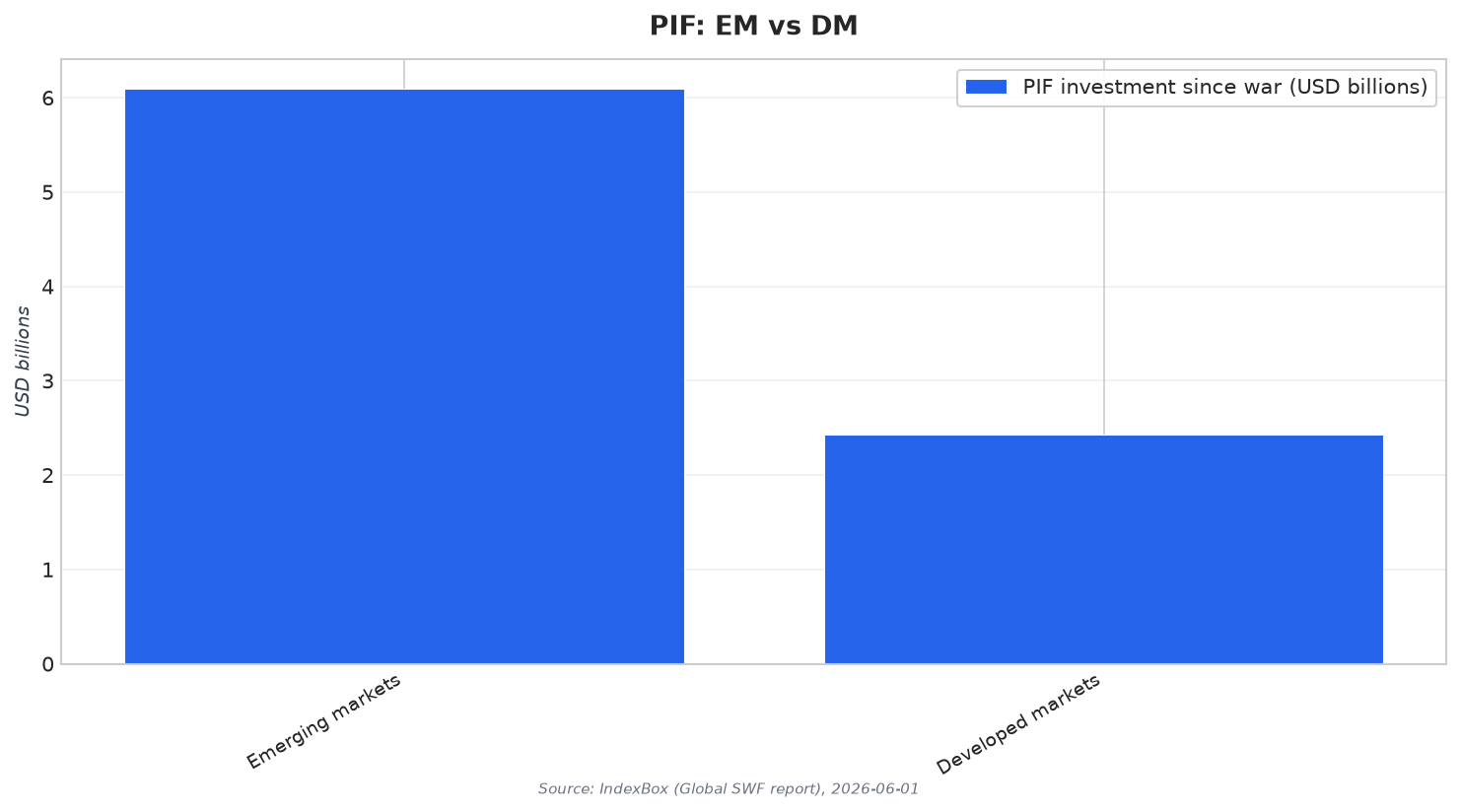
Capital allocation also helps explain why the market kept seeing big-ticket headlines associated with Gulf sovereign fund deals 2026 even amid disruptions. IndexBox reported that since the war, the PIF invested $6.1 billion in emerging markets, more than double the $2.43 billion deployed in developed assets. ADIA, in the same period, put $3.32 billion into emerging markets and $1.58 billion into developed markets. For context on scale, the Council on Foreign Relations cited Global SWF estimates that seven of the largest Gulf sovereign wealth funds invested $119 billion in 2025, with most of those funds going to the United States.
What did Bloomberg report about Gulf deal activity after the Iran war began?
Did GCC sovereign wealth funds slow their investment pace during the conflict?
Which fund was reported to have reduced its pace of investing?
How did PIF and ADIA split investments between emerging and developed markets after the war started?
What is driving attention to Gulf sovereign fund deals in 2026?
Talk to us for your needs in:
-
Due Diligence and Valuation Services
-
M&A Strategy and Advisory
-
Post-Merger Integration Management
-
Regulatory and Compliance Advisory
-
Market Entry and Expansion Consulting
-
Investment and Financial Analysis
-
In-Depth Market Survey for M&A
-
Market Intelligence and Insights in M&A
-
Feasibility Study and Assessment in M&A
-
Saudi M&A Benchmarking