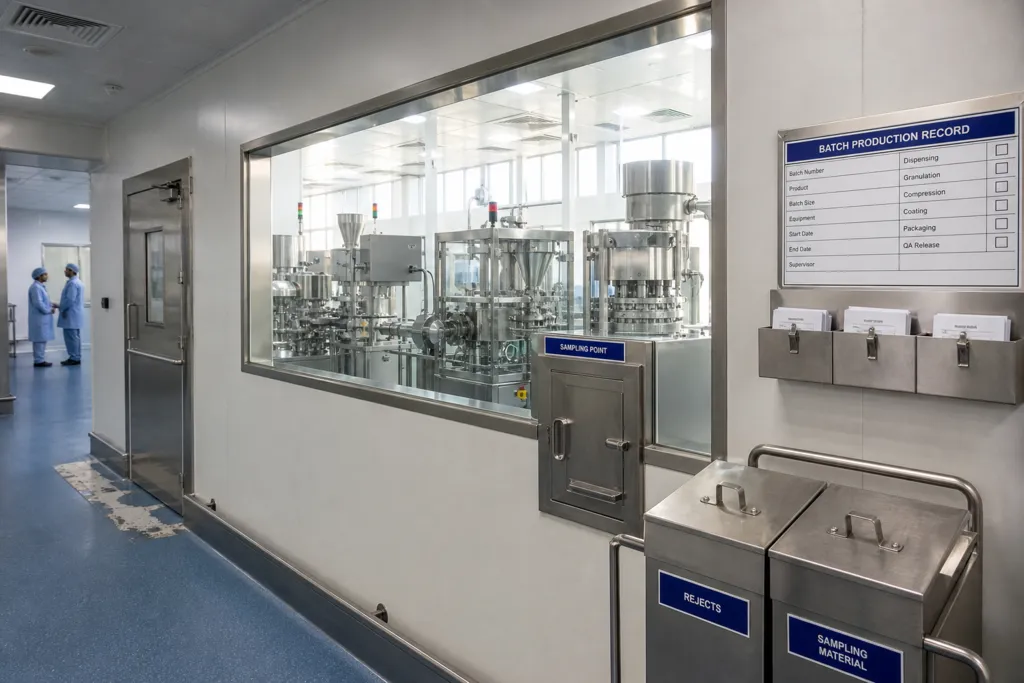
Jamjoom Pharma announced on April 28, 2026 that it signed a Facility Sale and Purchase Agreement with Pfizer Saudi Limited Company to acquire a pharmaceutical manufacturing facility in King Abdullah Economic City (KAEC), Saudi Arabia. The site specializes in manufacturing and packaging oral solid dosage (OSD) pharmaceutical products and operates across the full production chain. Jamjoom framed the facility as an important addition to its manufacturing network and said it is expected to enhance production and operational capabilities. At signing, completion was described as subject to customary conditions precedent, including necessary regulatory approvals, with a commitment to disclose material developments in line with applicable regulatory requirements.
Look closely at what is being transferred, and the "Jamjoom Pharma Pfizer plant" story reads like a practical playbook for multinationals exiting assets while keeping quality expectations intact. The KAEC facility includes on-site quality control laboratories supporting the full production chain, which matters because it anchors batch-related testing and day-to-day quality operations at the same site as manufacturing and packaging. Jamjoom also positioned the acquisition as building on Pfizer’s high-quality standards and reinforcing its own value of “Quality Without Compromise.” In parallel, the company emphasized workforce stability and a development culture that builds on established capabilities, a recurring pressure point in any change of ownership.
Why KAEC OSD Sites Are Attractive in a Portfolio Exit
Several sources converge on the same operational logic: this is an established, GMP-compliant OSD site in Saudi Arabia that covers formulation through final packaging, supported by integrated on-site quality control laboratories. HealthCare Middle East & Africa notes the facility’s focus on OSD products such as tablets and capsules and describes the full-chain setup as critical for consistent product quality and regulatory compliance. Pharma Now also highlights typical technical and documentation challenges in a facility divestiture, including aligning quality management frameworks, handling site master file transitions, and managing process validation documentation through the ownership change, while also pointing to workforce continuity as a stated priority.
Strategically, Jamjoom tied the acquisition to localization and industrial development priorities in the Kingdom. The company said the move supports national priorities around localization and industrial development, enhances regional supply resilience, and contributes to expanding access to high-quality, affordable healthcare solutions for patients across the Middle East and Africa. HealthCare Middle East & Africa similarly links the acquisition to efforts to localize pharmaceutical production and to improve supply chain responsiveness across MEA markets. CEO Tarek Hosni described the agreement as a milestone and said Jamjoom is focused on building a scalable platform for sustainable growth while maintaining high standards of quality and operational excellence.
After the signing phase, the process moved to completion. On August 16, 2026, Argaam reported that Jamjoom Pharma completed the Pfizer facility acquisition in Saudi Arabia and that the site is now part of Jamjoom Pharma’s manufacturing network. A separate legal advisory note from Khoshaim & Associates adds that the transaction involved transfer of a fully operational OSD facility together with associated assets, employees, contracts, and transitional arrangements intended to ensure continuity of operations. That combination—asset transfer, people transfer, and transitional arrangements—captures the core of a disciplined multinational exit, while giving the acquirer a running plant rather than a restart project.
What did Jamjoom Pharma agree to acquire from Pfizer in KAEC?
When was the KAEC facility acquisition completed?
How does the Jamjoom Pharma Pfizer plant deal support localization in Saudi Arabia?
What continuity measures were mentioned for the transfer of the KAEC site?
Talk to us for your needs in:
-
Due Diligence and Valuation Services
-
M&A Strategy and Advisory
-
Post-Merger Integration Management
-
Regulatory and Compliance Advisory
-
Market Entry and Expansion Consulting
-
Investment and Financial Analysis
-
In-Depth Market Survey for M&A
-
Market Intelligence and Insights in M&A
-
Feasibility Study and Assessment in M&A
-
Saudi M&A Benchmarking