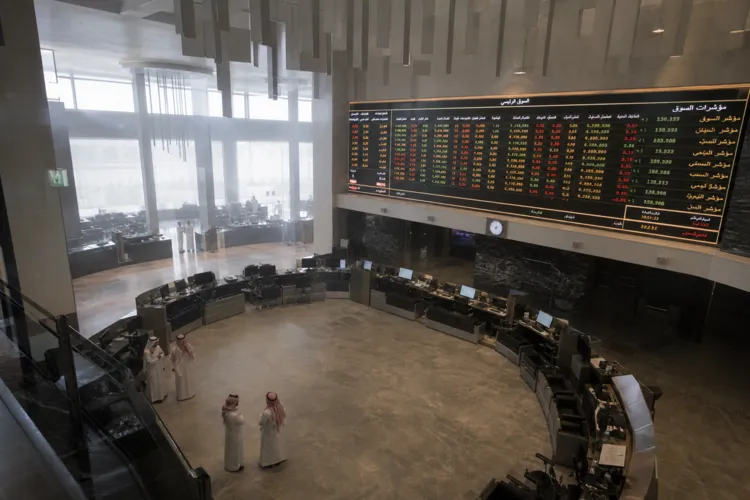
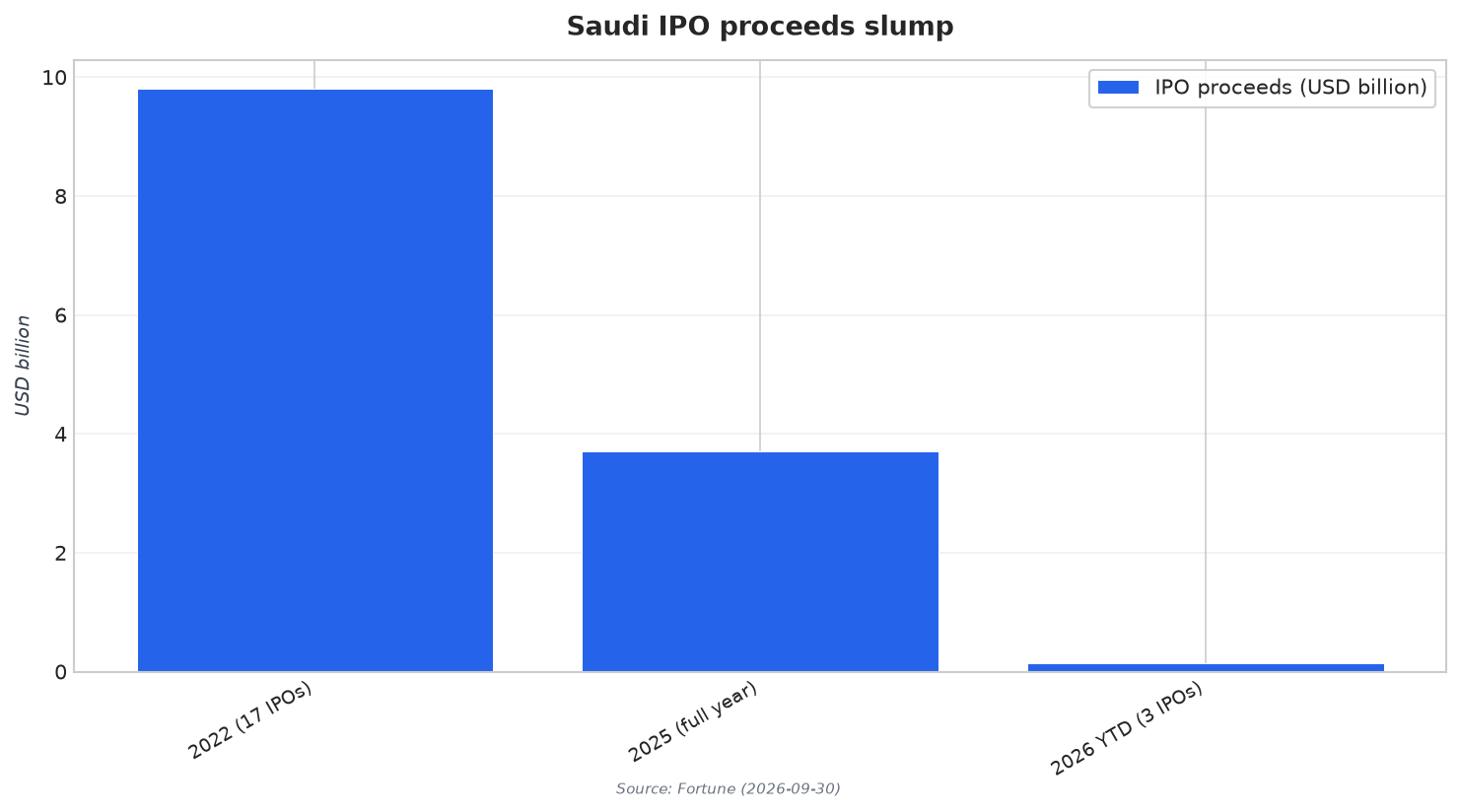
Saudi Arabia’s IPO market has slowed sharply, and that has pushed the Capital Market Authority (CMA) to consult on a wide package of reforms that directly affects how owners plan exits through Tadawul or Nomu. This year, only three companies—Dar Al Balad, Saleh Abdulaziz Al Rashed, and MSGA—listed across Tadawul and Nomu, raising a combined $144 million. That contrasts with $3.7 billion raised through Saudi share sales last year, and $9.8 billion raised across 17 listings in 2022. Fortune also cites the Saudi Exchange 2025 Annual Report: the $144 million raised so far this year equals 4% of the $3.53 billion raised in the same eight-month period in 2025, when 25 companies went public.
Behind the slowdown is a pricing standoff and weak aftermarket performance, which matters for any shareholder considering a listing as a liquidity event. Fortune reports that owners have resisted valuations the market is prepared to accept, while investors have been unwilling to pay higher prices after a year of losses on most new listings. Bloomberg data cited across multiple sources says that of the 17 companies that have gone public since 2025 on the main market, only four are trading above their issue price. In the same environment, several deals were delayed: planned listings from Mutlaq Al Ghowairi, Arabian Dyar, and Kesay Clinics were postponed, while six-month extensions granted to Alandalus Educational and Alromansiah expired, according to Fortune and KuCoin’s summary of the same developments.
What Mandatory Underwriting Could Change for Deal Execution
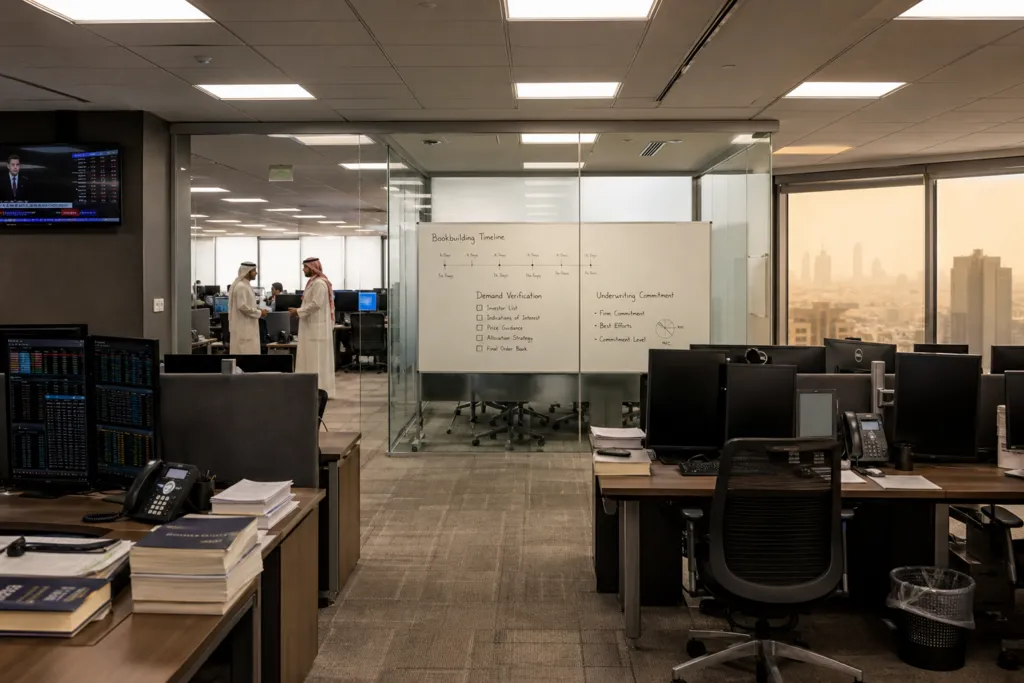
The center of the proposed Saudi IPO rules overhaul 2026 is the timing and force of underwriting. Fortune, Yahoo Finance, and KuCoin describe the key shift: the CMA is proposing that the underwriting commitment takes effect when book-building begins. In practice, this would require underwriters to purchase any IPO shares that investors fail to subscribe for, potentially leaving them responsible for the entire offering. Briefs adds that the regulator also wants banks to check that investor orders line up with cash actually on hand, aiming to cool oversized order books. For exit planning, this reframes the bank from a distributor into a risk-bearing guarantor, which can influence who is willing to underwrite, at what price, and under what diligence burden.
The consultation is also tied to disclosure and accountability, and that changes how issuers should prepare their equity story. Briefs reports that companies would have to disclose forward-looking statements and forecasts, including performance indicators covering at least the next year. Bloomberg similarly summarizes the proposals as including mandatory disclosure of forward-looking financial information and forecasts, plus verification that IPO orders are backed by investors’ actual liquidity. Osama Alowedi, founder and CEO of Riyadh-based asset manager EQCM, is quoted by Fortune and Yahoo Finance saying the proposed rules should “increase accountability, improve disclosure, and strengthen price discovery,” helping create “greater discipline around valuation” so deals are priced more sensibly.
For boards and owners mapping a Saudi exit, the reforms create trade-offs: potentially stronger execution standards, but also more friction. Semafor reports that bankers and lawyers in Riyadh worry requirements such as hard underwriting could delay deals already in the pipeline, and that smaller banks may not be able to participate while even large banks may be wary of untested new rules. That comes as the CMA investigates poor performance in recent IPOs, including earnings shortfalls after listing, and has sought details from global and local investment banks on pricing and allocation practices, according to Fortune and Semafor. Briefs notes the CMA is taking feedback on the consultation through Oct. 22, reinforcing that timelines and final requirements could still change.
What is the CMA proposing on mandatory underwriting, and when would it apply?
Why is Saudi Arabia revisiting IPO rules now?
How could the reforms affect IPO pricing and valuation discussions?
What does the Saudi IPO rules overhaul 2026 mean for exit planning timelines?
What new disclosure expectations are mentioned in the consultation proposals?
Talk to us for your needs in:
-
Due Diligence and Valuation Services
-
M&A Strategy and Advisory
-
Post-Merger Integration Management
-
Regulatory and Compliance Advisory
-
Market Entry and Expansion Consulting
-
Investment and Financial Analysis
-
In-Depth Market Survey for M&A
-
Market Intelligence and Insights in M&A
-
Feasibility Study and Assessment in M&A
-
Saudi M&A Benchmarking