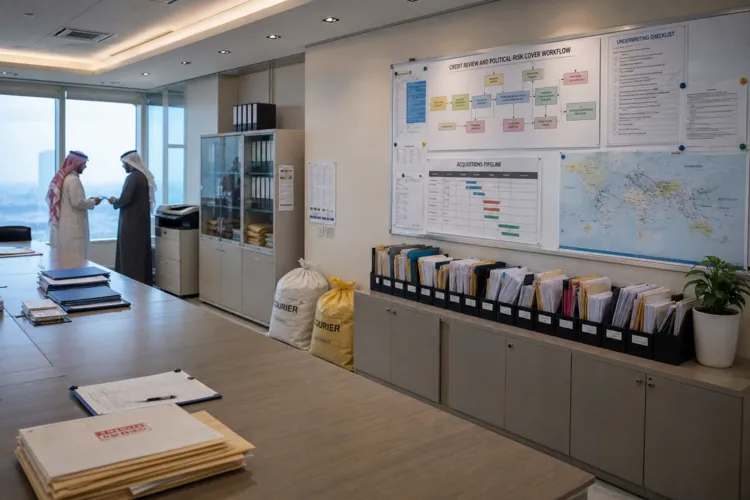

Saudi Arabia’s open banking story changed in 2026. On 26 March 2026, the Saudi Central Bank (SAMA) announced that open banking had moved out of a controlled testing environment and into a formal licensing regime. In practice, that shift makes open banking a fully supervised activity. Firms that want to provide open banking services must obtain a licence and prove they can meet requirements tied to API performance, data security, consent management, and governance standards. The signal to the market is simple. Open banking is no longer a trial. It is infrastructure. And infrastructure stages often become an M&A stage when scale, compliance, and trust start to matter more than experiments.
SAMA’s move also creates a clearer “buy versus build” decision for banks and fintechs. A similar dynamic is already visible in global deal commentary. A Q4 2025 fintech M&A report from Windsor Drake says analysts expect FinTech M&A volume to climb 15% through the second quarter of 2026, driven by demand for AI integration, clearer regulatory frameworks, and companies consolidating platforms. The same report notes that, in Europe, open banking regulatory developments are creating pressure for platform consolidation because institutions can find it more efficient to acquire FinTech companies for compliance purposes rather than building those capabilities themselves. That logic can translate into the Saudi context as SAMA licensing turns compliance-ready open banking into an asset class.
Why 2026 Feels Like a Consolidation Year for Open Banking
Globally, the open banking value pool is shifting toward areas that reward depth and operational maturity. Astute Analytica says that in 2022–2024 nearly 65% of open banking market value came from connectivity fees, but by 2026 the value migrated toward value-added services, which account for 54% of total market revenue. It also states that payment initiation is outpacing account information for the first time, growing at 35% year over year. These are services that are harder to deliver without strong security, dependable APIs, and integration capacity. In parallel, FMI forecasts that in 2026 software platforms hold a 60.0% share and payments and transfers lead with a 55.0% share. As the market prizes platforms and transaction rails, M&A becomes a fast route to acquire capabilities.
SAMA’s licensing milestone adds a local catalyst because it formalizes who can operate, and under what obligations. Clyde & Co reports that Lean Technologies became the first firm to secure an open banking licence from SAMA. The same source describes Lean as providing high performance, developer oriented APIs that support secure data access, payment initiation, and embedded finance solutions, and says its licensing sets a benchmark for other providers in the Kingdom. When a benchmark emerges, the market tends to cluster around it. The natural response is consolidation: smaller or narrower providers may partner, merge, or be acquired to keep up with licence expectations, implementation timelines, and the operational demands of secure consent and governance.
The macro growth narrative also raises the stakes for Saudi open banking M&A decisions, even when the largest numbers are global rather than local. Astute Analytica values the global open banking market at USD 36.16 billion in 2025 and projects USD 266.75 billion by 2035, at a 22.12% CAGR for 2026–2035. FMI estimates the market at USD 29.6 billion in 2025, reaching USD 37.4 billion by the end of 2026 and USD 386.1 billion by 2036, at a 26.3% CAGR. Those projections do not describe Saudi Arabia specifically, but they show why buyers pay for scale and why regulated capabilities matter. As open banking evolves from compliance cost to product revenue, SAMA-licensed operators and their partners can become prime consolidation targets.
What changed in Saudi Arabia’s open banking approach in 2026?
Who was the first company to receive a SAMA open banking licence?
Why does regulation often trigger fintech consolidation and M&A?
What market shift in 2026 makes open banking providers more acquisition-ready?
How is Saudi open banking M&A connected to the platform trend in open banking?
Talk to us for your needs in:
-
Due Diligence and Valuation Services
-
M&A Strategy and Advisory
-
Post-Merger Integration Management
-
Regulatory and Compliance Advisory
-
Market Entry and Expansion Consulting
-
Investment and Financial Analysis
-
In-Depth Market Survey for M&A
-
Market Intelligence and Insights in M&A
-
Feasibility Study and Assessment in M&A
-
Saudi M&A Benchmarking