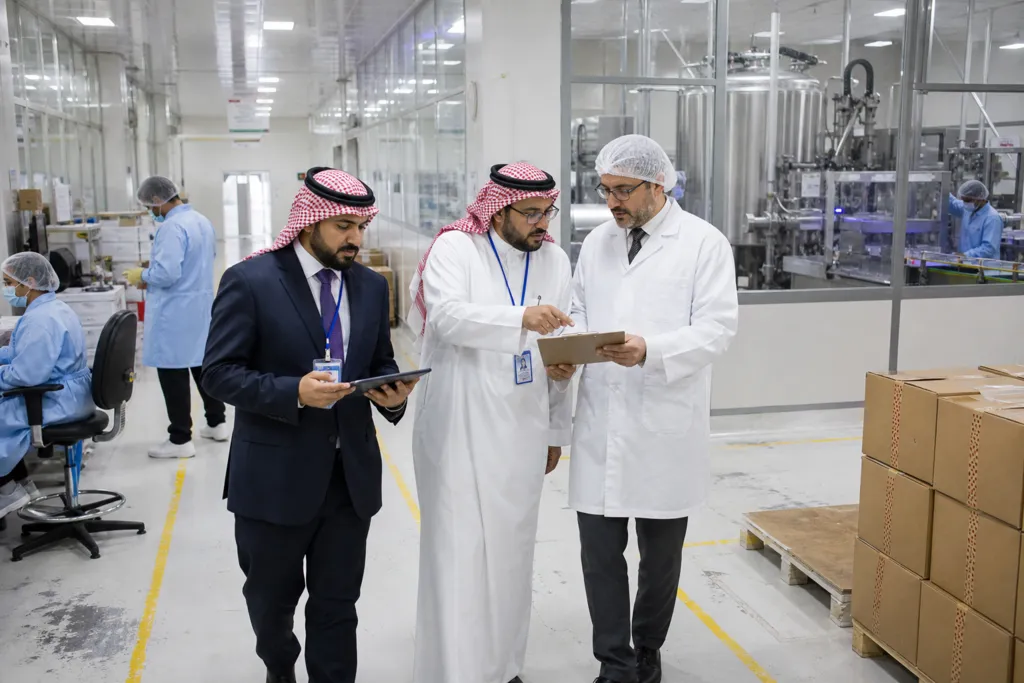
Saudi pharma M&A 2026 is increasingly about capacity and localization. SPIMACO’s own operating signals show why. In Q4 2025, SPIMACO’s private-sector sales reached SAR 239.5 million, versus SAR 51.9 million from government sales, and the company described the private sector as the largest contributor to sales. The CFO also said private sector growth was around 25%. At the same time, contract manufacturing rose about 16% and was framed as a higher-margin business that directly supported profitability. These figures help explain why dealmaking narratives now lean toward securing scalable, higher-value manufacturing and distribution reach.
SPIMACO’s capacity story is also tied to product mix and launch cadence. Revenue rose 5.3% in Q4 2025, driven by a focus on higher-value products, cost discipline, and a balanced approach to growth and sustainability. The company also noted the launch of more than eight new medications in 2025, which began to support Q4 performance, with further upside expected in 2026 as distribution expands and market share increases. It added that the full impact of launches typically materializes gradually as supply chains stabilize. For Saudi pharma M&A 2026, that sequencing matters, because buyers often look for assets that can scale without disrupting supply reliability.
Localization Deals Raise the Strategic Floor
Localization is not limited to listed manufacturers. A Shilpa Medicare-linked partnership described a new JV entity to be based in the Kingdom of Saudi Arabia, structured as a limited liability company majority owned by PPI (70%) with Koanna holding a 30% stake. The plan was framed as aligning with Vision 2030 goals of economic diversification and localizing strategic industries, with execution in two key phases to support swift market entry and a long-term manufacturing strategy. In parallel, Co-Diagnostics’ joint venture Comira received approval for a manufacturing facility in the Kingdom of Saudi Arabia’s Sudair Industrial City, developed and managed by MODON, with localization of advanced diagnostic technologies and support for expansion objectives across the Middle East and Northern Africa.
In 2026, investment structures also look like M&A adjacencies, even when they are not full takeovers. MS Pharma announced that Olayan Financing Company made a minority equity investment via issuing new share capital in exchange for a substantial cash investment, resulting in OFC acquiring a minority stake. MS Pharma tied the partnership to growth in Saudi Arabia and across the MENA region. It also said its biologics site became the first in the Kingdom to receive SFDA GMP approval for biologics manufacturing, and that it plans this year to become the first supplier of locally manufactured biologics to the Saudi market. These milestones reinforce localization positioning and can influence how counterparties price strategic stakes versus outright acquisitions.
Broader market growth adds context to Saudi pharma M&A 2026, especially for capacity-led strategies. One industry view cited an expected USD $12.4 billion in 2025 and a projected USD $18.1 billion by 2030 for the Saudi pharmaceutical market as a whole, at a nearly 8% CAGR. It also said the API CDMO market alone earned over USD $2.8 billion in 2024 and is expected to surpass USD $4.5 billion by 2033. This is broader-scope data, but it supports the logic behind SPIMACO’s move into higher-value segments, including its oncology and high-toxicity drugs facility described as strategic for pharmaceutical security in the Kingdom, and it reinforces why deals keep clustering around manufacturing depth and localization readiness.
What is driving Saudi pharma M&A 2026?
How important is the private sector to SPIMACO’s sales mix?
What operational lever supported SPIMACO profitability in Q4 2025?
Which localization deals were highlighted outside SPIMACO?
Talk to us for your needs in:
-
Due Diligence and Valuation Services
-
M&A Strategy and Advisory
-
Post-Merger Integration Management
-
Regulatory and Compliance Advisory
-
Market Entry and Expansion Consulting
-
Investment and Financial Analysis
-
In-Depth Market Survey for M&A
-
Market Intelligence and Insights in M&A
-
Feasibility Study and Assessment in M&A
-
Saudi M&A Benchmarking