
When conflict hit regional sentiment in 2026, the story in Saudi Arabia was less about a shutdown and more about selective friction. In Q1 2026, Saudi M&A recorded 24 transactions worth USD 689 million, up 4% year-on-year, according to an Ansarada Middle East report cited by local coverage. That narrow increase matters because it arrived while deal teams were actively re-checking pricing, timelines, and financing conditions. At the same time, a MUFG note described business conditions in the region as stabilising after the initial shock, with Saudi Arabia’s PMI improving to 52.8 in May 2026 from 51.5 in April, reflecting momentum in non-oil sectors supported by government spending, major infrastructure projects, and resilient logistics activity.
Zooming out shows why the Saudi M&A Iran war impact became a watchpoint for investors. Across MENA, figures cited from Ansarada coverage show 196 announced deals in Q1 2026 valued at USD 23.3 billion, down from 207 deals worth USD 31.3 billion a year earlier. Separate LSEG figures in the same reporting described a sharper pullback in sentiment-sensitive flows: MENA M&A value slumped 74% year-on-year to USD 18.8 billion in 1Q, with inbound M&A plunging 90% to USD 4.6 billion and outbound falling 55% to USD 11.5 billion. Against that backdrop, Saudi Arabia’s Q1 uptick reads as resilience, even if it does not imply immunity.
Delays, Not Derailments: What Kept Deals Moving
Regional advisory commentary framed the core pattern as patience. In H1 2026, Middle East M&A totalled USD 45.4 billion across 516 transactions, described as “remarkably resilient” despite the U.S./Iran war, with few deals terminated and longer timelines the primary consequence. The slowdown was described as selective: retail, FMCG, hospitality, and tourism were most affected, while defense tech and strategic buyer activity stayed robust. This same view noted that if stability holds, paused deal processes, intra-regional investment, and IPO pipelines are expected to restart quickly. For Saudi-linked deal teams, the practical takeaway was that execution risk rose, but the pipeline did not vanish.
In Saudi Arabia, both policy signals and sector concentration helped explain why activity could continue. Deloitte’s April 2026 Middle East Economic Monitor said the PIF’s 2026–2030 strategy signals a shift away from rapid expansion and toward long-term value creation, spending discipline, and resilience to external economic shocks. One on-the-ground example of continued execution came from BinDawood Holding, which completed the acquisition of a 51% stake in Vaza Food Co. for SAR 217.9 million after finalising procedures tied to shares ownership transfer and amended bylaws. Regionally, Q1 2026 technology led by volume with 68 deals worth USD 7.3 billion, and transportation generated the highest agreement value at USD 8.2 billion from nine transactions, pointing to where buyers still leaned in.
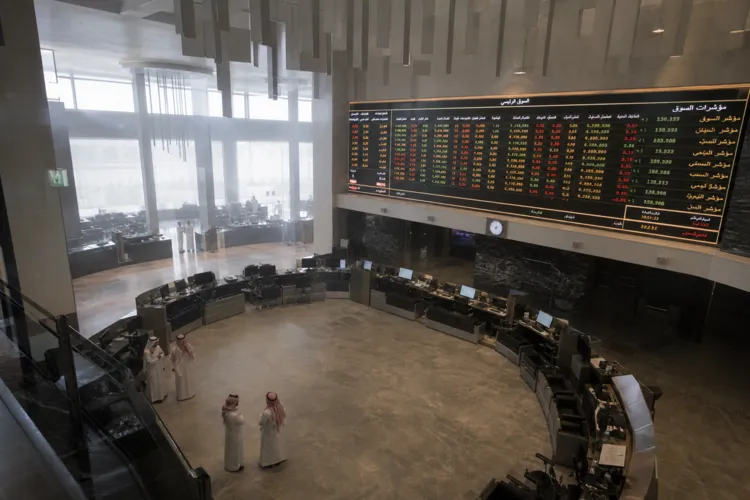
Capital markets signals also pointed to durability during volatility. Fitch-linked reporting said Tadawul equity market capitalisation grew 7% year-on-year at the end of May 2026, despite volatility related to the Iran war, while public fund assets under management grew 20% year-on-year and 5% quarter-on-quarter. Foreign participation also shifted: foreign ownership accounted for about 44% of total buys and 37% of total sells in the week ending 11 June, up from 34% of buys and 30% of sells in the week ending 25 December 2025, and total foreign ownership represented 12.6% of free float as of 11 June versus 12.4% at end-2025. Together, these signals helped explain why Saudi dealmaking could keep moving even as regional totals softened and timelines stretched.
What was the clearest sign of Saudi deal resilience in early 2026?
How did broader MENA M&A compare during the same period?
Did the 2026 conflict cancel deals, or mainly slow them down?
Which sectors were hit hardest, and which held up better?
What does the Saudi M&A Iran war impact look like in market indicators beyond M&A totals?
Talk to us for your needs in:
-
Due Diligence and Valuation Services
-
M&A Strategy and Advisory
-
Post-Merger Integration Management
-
Regulatory and Compliance Advisory
-
Market Entry and Expansion Consulting
-
Investment and Financial Analysis
-
In-Depth Market Survey for M&A
-
Market Intelligence and Insights in M&A
-
Feasibility Study and Assessment in M&A
-
Saudi M&A Benchmarking