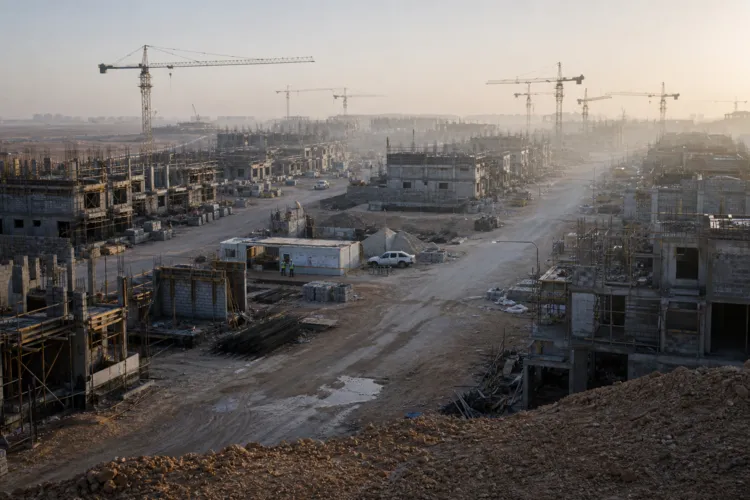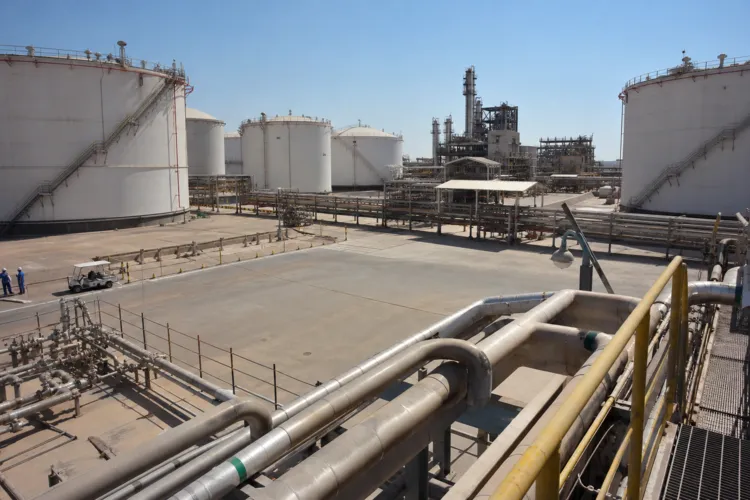
Hexagon’s $2.7 billion contract to build a hyperscale AI compute facility is more than a construction project. It is a capital signal that changes deal logic across Saudi AI infrastructure M&A. The Middle East Insider ties the Hexagon deal to PIF’s 58% construction budget cut and calls it one coherent message: capital is moving from concrete to compute. In that setting, buyers and sellers will rethink what “strategic” means in Saudi tech deals.
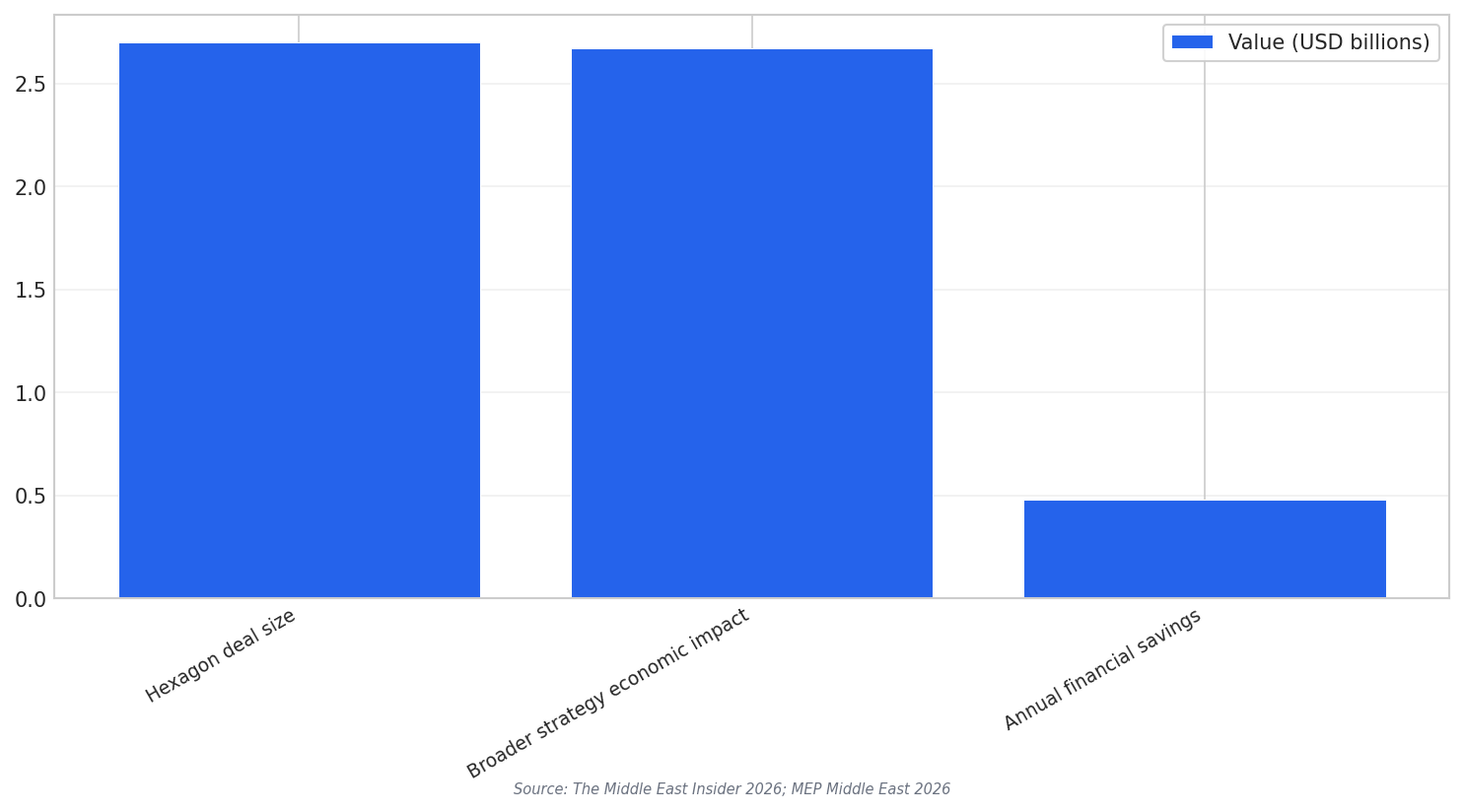
Several numbers show why this single project can reshape the market. Hexagon is positioned as a $2.7 billion commitment with 480 megawatts of total capacity. Gulf News also says the site footprint exceeds 30 million square feet and classifies Hexagon as Tier IV. MEP Middle East adds that the broader strategy is expected to generate cumulative economic impact exceeding USD 2.67 billion and annual financial savings of more than USD 480 million.
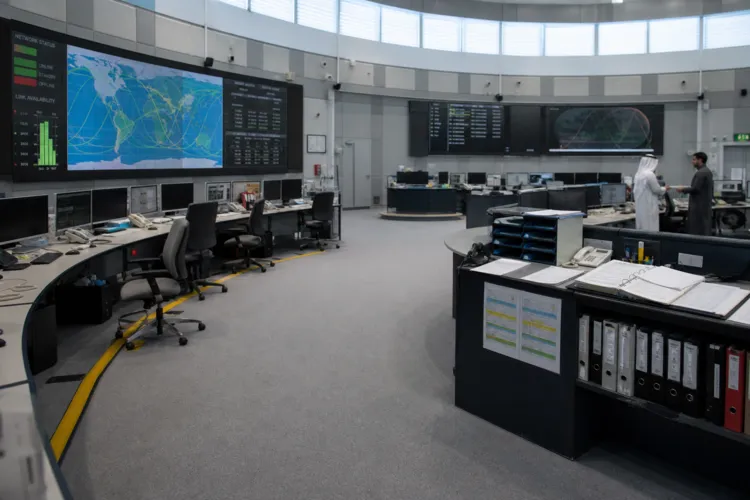
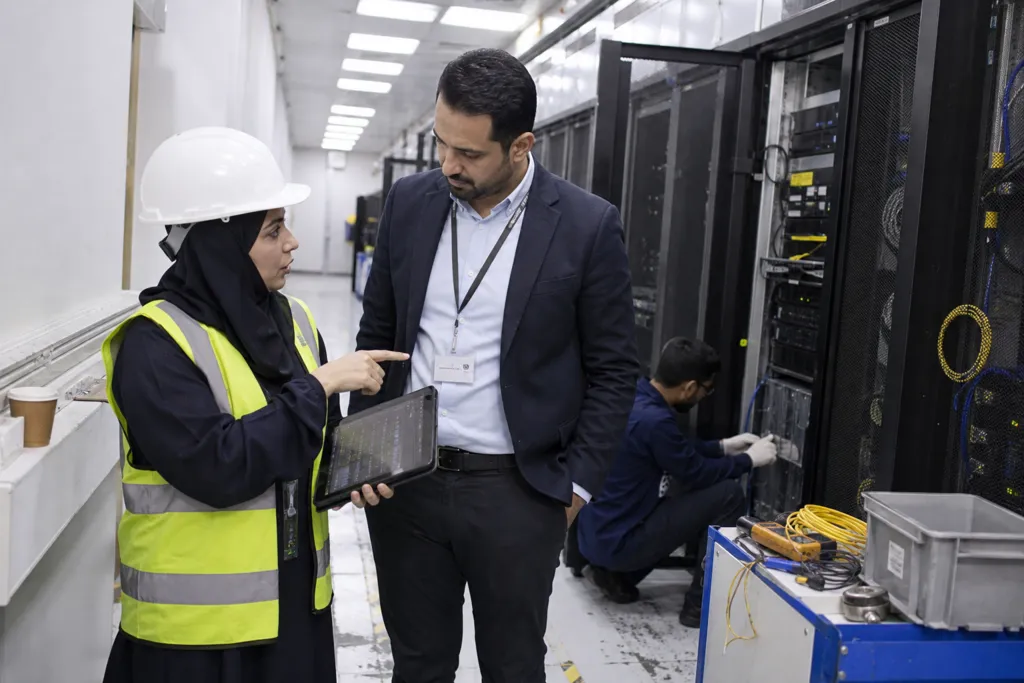
For M&A, the key change is what becomes the core asset. When a 480-megawatt campus is described as a regional AI compute hub, deal interest shifts toward compute supply chains, operations, and regulated data platforms. The Middle East Insider frames this as a misalignment risk for investors focused on Saudi construction exposure, because capital is being redirected toward tech assets. That same redirection can also steer acquisitions toward data center operators, specialized cooling and networking capabilities, and AI-ready service layers that attach to the new capacity.
Why This Deal Pulls M&A Toward Chips, Servers, and Sovereign Data
Hexagon also pulls global tech partners deeper into Saudi deal-making. The Middle East Insider says NVIDIA is the primary GPU supplier to Saudi data center projects and that the Hexagon facility alone represents a potential multi-billion dollar NVIDIA chip order over its build-out timeline. It also expects AMD to capture 15–25% of the facility’s compute allocation. It names Dell Technologies and Hewlett Packard Enterprise (HPE) as suppliers for rack, networking, and cooling infrastructure around GPU clusters. These relationships can trigger more partnerships and acquisitions that secure hardware supply, integration talent, and long-term support contracts.
Policy and sovereignty push the M&A angle even further. Gulf News describes Hexagon as part of a drive for technical sovereignty over national data, aligned with SDAIA and Vision 2030. Saudi Gazette and Serrari Group list a regulatory framework that includes the Personal Data Protection Law and executive regulations, plus national principles and standards for generative AI, AI adoption frameworks, and the National Data Controllers Registry. Companies that already meet these expectations may become premium targets, because they reduce execution risk for operators building services on top of government-grade infrastructure.
Finally, the deal lands inside a wider investment surge. The Middle East Insider reports that total AI-related investment commitments from Saudi public and private entities exceed $20 billion as of early 2026, and it includes Microsoft’s estimated $2.2 billion five-year commitment, Google Cloud infrastructure deals, PIF direct investments, and Aramco’s internal AI R&D. With this scale, Saudi AI infrastructure M&A is likely to center on assets that turn large compute campuses into usable services: compliant data pipelines, sector-specific AI deployments, and the operational muscle to run interconnected facilities.
What is the Hexagon deal, and why does it matter for Saudi AI infrastructure M&A?
Which companies are linked to the Hexagon AI compute buildout?
How does data sovereignty shape deal priorities around Hexagon?
What other investment signals sit alongside the Hexagon project?
Talk to us for your needs in:
-
Due Diligence and Valuation Services
-
M&A Strategy and Advisory
-
Post-Merger Integration Management
-
Regulatory and Compliance Advisory
-
Market Entry and Expansion Consulting
-
Investment and Financial Analysis
-
In-Depth Market Survey for M&A
-
Market Intelligence and Insights in M&A
-
Feasibility Study and Assessment in M&A
-
Saudi M&A Benchmarking