
Saudi Arabia’s exit conversation in 2026 is shaped by a simple tension. Owners want valuation and certainty at the same time. That is why the Saudi dual-track exit has become a practical playbook: it keeps an IPO process and a private M&A sale process running in parallel, with both tracks resourced as real options. In this setup, management prepares IPO-ready financials and disclosure materials while advisers also run a controlled auction to solicit bids from strategic and financial buyers. The point is not indecision. It is leverage, because the seller can steer toward whichever route delivers the better outcome at the decision point.
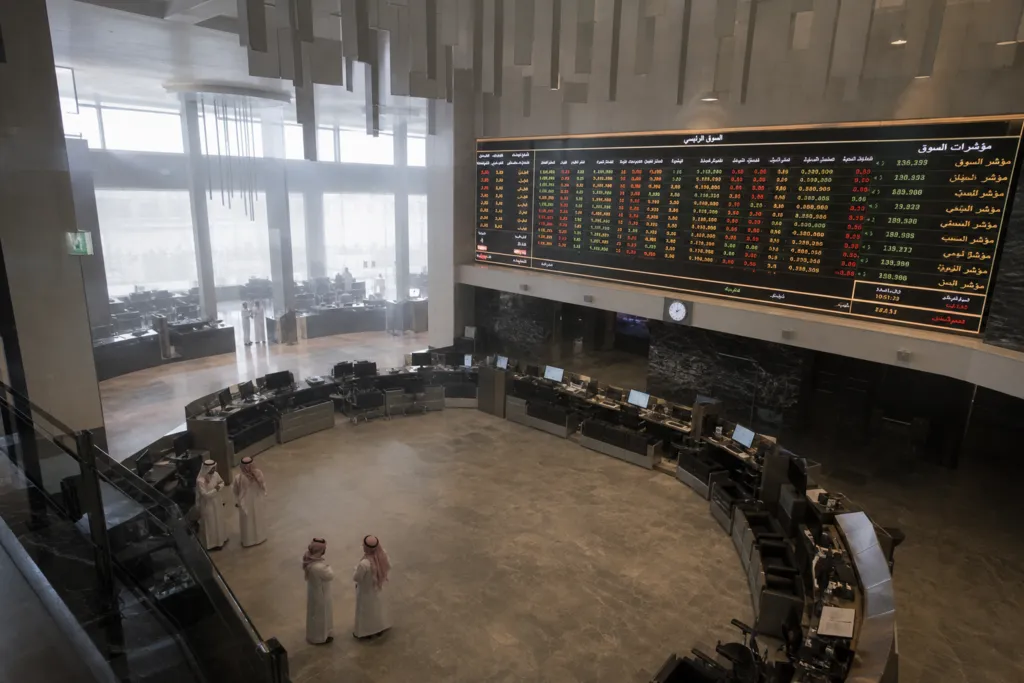
Public market signals are mixed, which makes optionality valuable. The Saudi Exchange’s 1st Quarter Statistical Report 2026 put TASI’s Q1 close at 11,249.54 points, down 6.45% year over year, with equity market capitalisation of SAR 9,858.85bn (US$2,629.03bn) and quarterly traded value of SAR 291.07bn (US$77.62bn), down 19.72%. By the half-year report, TASI stood at 10,799.92, market capitalisation at SAR 9,436.00bn (US$2,516.27bn), and H1 traded value at SAR 616.57bn (US$164.42bn), down 10.39% year over year. At the same time, share volume rose 7.64% while the number of trades fell 11.79%. These cross-currents can complicate IPO timing, which is exactly where a parallel sale track can protect the exit plan.
Why Dual-Track Exits Create Leverage When Pricing Is Unclear
The mechanics of a dual track are built to force price discovery. Sellers keep a credible IPO alternative alive while negotiating a sale, which creates competitive tension and reduces the odds that buyers can lowball. Deal professionals describe the two tracks as feeding each other: a buyer aware of a ready IPO alternative faces a stronger seller, while softer IPO demand can be salvaged if a trade or sponsor buyer steps in before listing. Importantly, many dual tracks do not end in an IPO at all. The IPO preparation can function as a pressure mechanism that forces better bids, giving sellers flexibility to “let the market choose” the more attractive route.
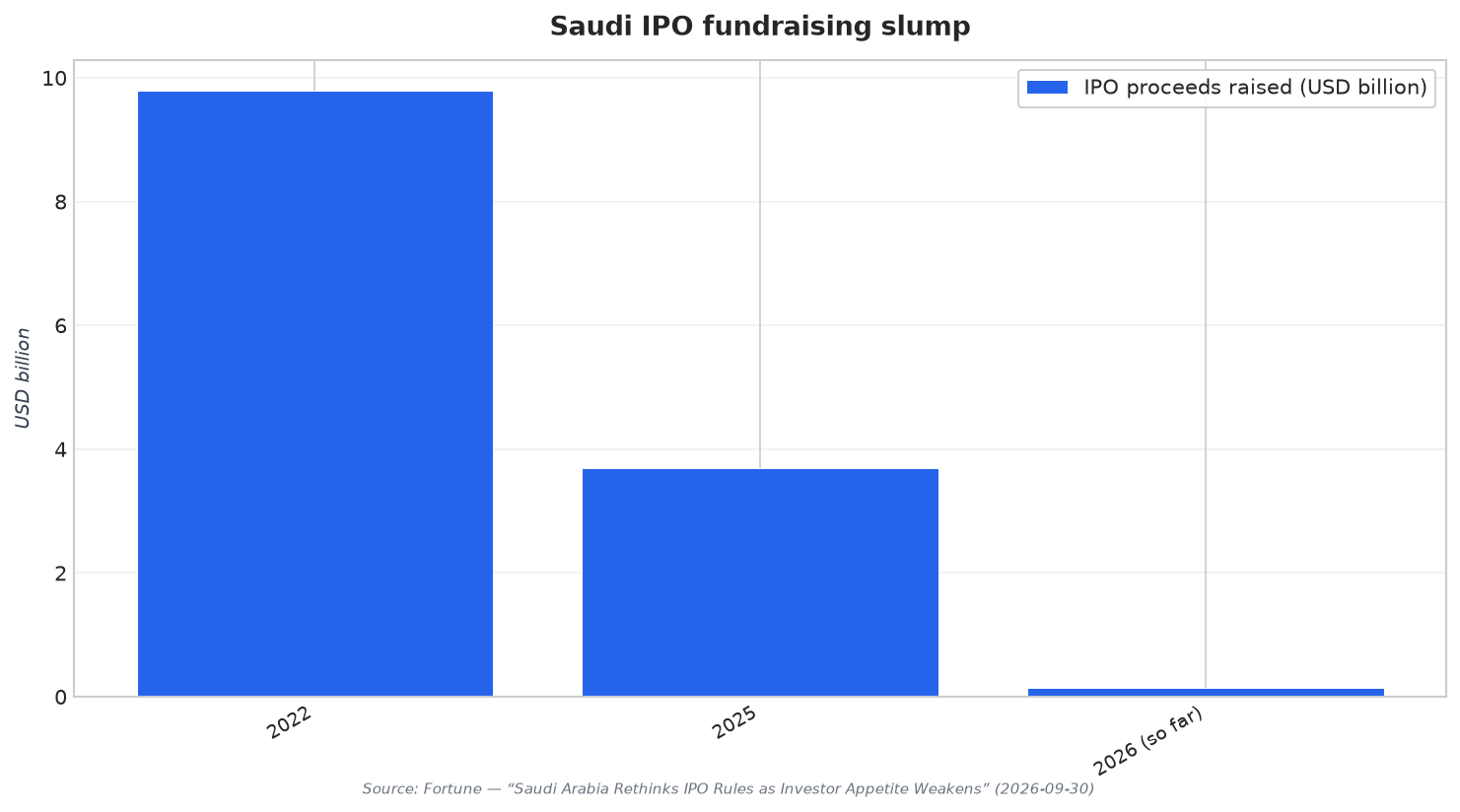
Saudi-specific IPO momentum has also been uneven, reinforcing why sellers may keep both doors open. Fortune reported that just three companies—Dar Al Balad, Saleh Abdulaziz Al Rashed, and MSGA—had listed across Tadawul and the parallel market Nomu so far in 2026, raising a combined $144 million. By comparison, Saudi companies raised $3.7 billion through share sales last year, and $9.8 billion was raised across the 17 companies that listed in 2022. Fortune also noted that the $144 million raised so far in 2026 represented 4% of the $3.53 billion raised during the same eight-month period in 2025, when 25 companies went public. With postponements and extensions also reported, sellers can rationally pursue a dual track until demand and valuation become clear.
For sellers that may fit Nomu, the trade-offs can be even sharper. Axis Intelligence Research noted Nomu’s lighter admission and disclosure requirements and that it dominated Saudi application volume, with 23 of 33 Q1 2026 applications. But the same source flags typical junior-market compromises: thinner free float, wider spreads, and limited institutional coverage. It can build a public track record, but it does not deliver index inclusion or a deep institutional order book. In that context, a dual-track exit can be a way to pursue IPO readiness while still running a private auction, so the seller can pivot if the public route does not deliver the intended outcome.
What is a Saudi dual-track exit in practical terms?
What 2026 Tadawul indicators make optionality attractive for sellers?
How slow was Saudi IPO fundraising in 2026 compared with prior periods?
Why might a seller consider Nomu, and what are the trade-offs?
Talk to us for your needs in:
-
Due Diligence and Valuation Services
-
M&A Strategy and Advisory
-
Post-Merger Integration Management
-
Regulatory and Compliance Advisory
-
Market Entry and Expansion Consulting
-
Investment and Financial Analysis
-
In-Depth Market Survey for M&A
-
Market Intelligence and Insights in M&A
-
Feasibility Study and Assessment in M&A
-
Saudi M&A Benchmarking