
Foreign M&A in Saudi Arabia is entering a new phase. The Investment Law (Royal Decree No. M/19) was published on 11 August 2024 and replaces the Foreign Investment Law issued in 2000. The law was expected to come into force 180 days after publication, on or around 07 February 2025, and other summaries describe it as coming into force in February 2025. For dealmakers, the message is clear: the entry route, investor rights, and compliance expectations are changing in ways that affect timelines and certainty.
The move is tied to wider national goals. The law aims to enhance competitiveness of the investment environment, contribute to economic development aligned with Vision 2030 and the National Investment Strategy, and create job opportunities. The Minister of Investment, Eng. Khalid Al-Falih, said the law reaffirms Saudi Arabia’s commitment to a welcoming and secure environment for investors, driving growth and strengthening the Kingdom’s position as a global investment destination. These aims matter in M&A because they shape how regulators think about transactions.
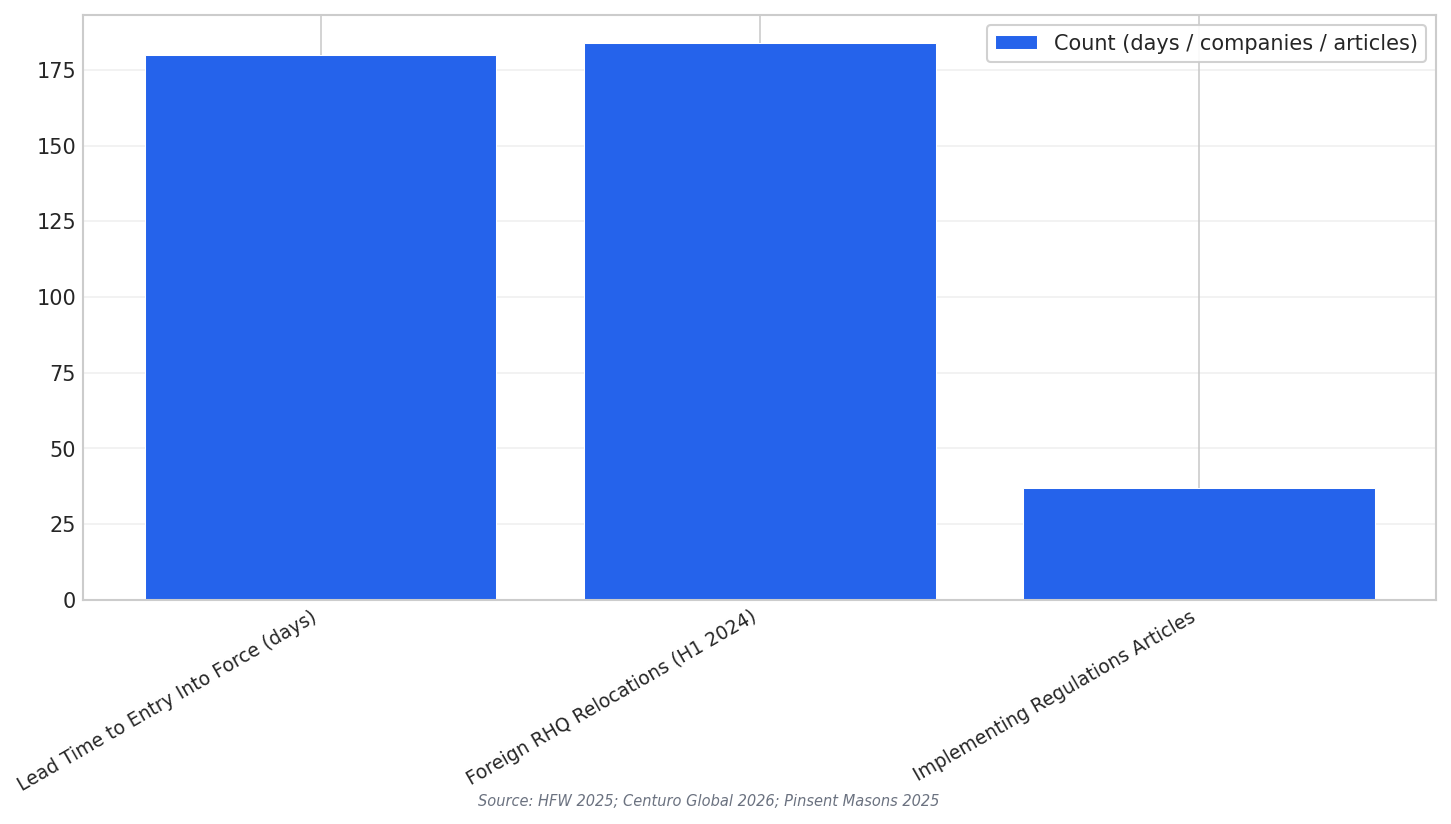
Several concrete dates and counts help show the pace of change: the law was published in August 2024, was designed to take effect after 180 days, and executive or implementing steps followed soon after. Another indicator is market momentum: in the first half of 2024 alone, 184 foreign companies relocated their regional headquarters to Saudi Arabia. Finally, the executive regulations that were approved in April 2025 and came into effect on 25 April comprise 37 articles. Taken together, these figures show a fast-moving policy shift that M&A teams must track.
What Changes Most for Foreign M&A Deals
The biggest operational change is market entry. The old requirement for a foreign investment licence (often called a SAGIA or MISA licence) is being replaced by an investor registration mechanism. Investors are expected to register with the Ministry of Investment (MISA), and another overview describes a new National Register of Investors. For M&A, this can affect pre-closing conditions, sequencing, and how quickly a buyer can set up or regularise a Saudi acquisition vehicle.
Another shift is broader coverage and equal treatment. The new law applies to local and foreign investors, and it also applies in special economic zones, without prejudice to specific SEZ legislation. Implementing materials describe Article 4 as mandating equal treatment for all investors, and the regulations reinforce that treatment shall be equal between local and foreign investors in similar circumstances. In practice, this can support more predictable deal negotiation because the legal framework is designed to apply across investor types, subject to exceptions for national interests.
Protections and remedies also matter in M&A. Summaries state the law guarantees protection from expropriation, fair treatment, freedom to manage investments, and the ability to transfer funds, and it says investments cannot be confiscated or expropriated without legal procedures and fair compensation. The regulations and commentary also highlight enhanced protections including intellectual property and trade secrets. On disputes, the law allows alternative dispute resolution methods such as arbitration and mediation, while keeping the right to go to competent courts. For acquisition agreements, this influences warranty, indemnity, and dispute clauses.
What is the Saudi Investment Law 2026 changing for foreign M&A entry steps?
Does the new Investment Law treat foreign and local investors the same?
What protections does the law highlight that matter in acquisition risk?
Can investors use arbitration under the new law in KSA deal disputes?
Talk to us for your needs in:
-
Due Diligence and Valuation Services
-
M&A Strategy and Advisory
-
Post-Merger Integration Management
-
Regulatory and Compliance Advisory
-
Market Entry and Expansion Consulting
-
Investment and Financial Analysis
-
In-Depth Market Survey for M&A
-
Market Intelligence and Insights in M&A
-
Feasibility Study and Assessment in M&A
-
Saudi M&A Benchmarking